

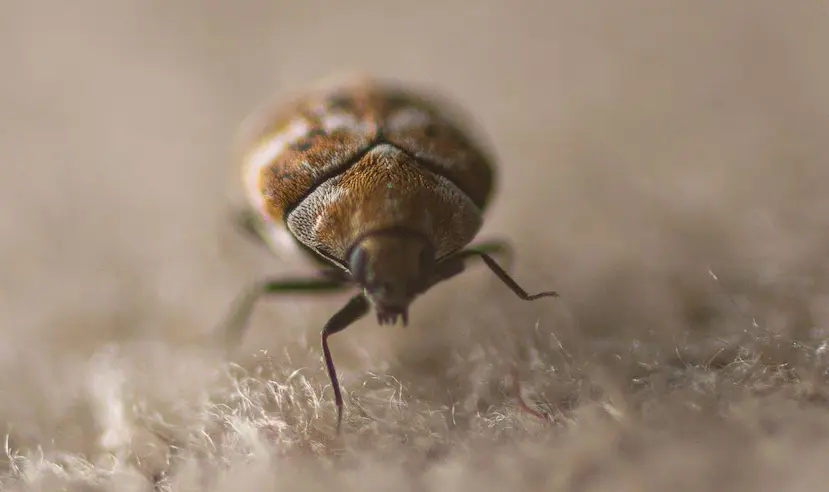
Carpet beetles are household insects that must be eradicated not only by confronting the beetles you can see, but also those you cannot. The first step in removing carpet beetles is to find the source; then thoroughly clean rugs and nearby areas, and make sure the larvae do not return.
According to the Australian Museum, carpet beetle larvae can damage rugs, clothing, blankets, furniture and other household items. They may feed on:
Carpet beetle larvae can infest carpets, clothing, blankets, furniture, and other objects around the house. They may feed on:
- Wool and silk
- Fur, feathers and leather
- Pet hair
- Dead insects
- Food crumbs and organic debris
Handmade Persian rugs are especially susceptible as they are often made with wool, silk or a combination of the two. Dark, undisturbed areas under rugs and furniture are areas where larvae may hide and feed naturally.
Knowing the difference between Persian rugs and other rugs can also help you decide which materials to inspect more closely.
If you find carpet beetles, it doesn’t mean that your home is dirty. Activity can persist in Australia through much of the year, depending on indoor warmth. According to the Western Australian Museum, adults frequently deposit eggs on wool, silk, feathers and fur.
This guide will help you to inspect rugs, identify an infestation, clean infested areas, select treatments and prevent carpet beetles from coming back.
How to Identify Carpet Beetles in Rugs
Before working out how to get rid of carpet beetles, you must first identify the cause of the problem with your rug. If you find one beetle, I suggest a complete inspection of the rug.
Adult carpet beetles are very small and oval. They can be black, brown or speckled with white and yellow markings, depending on the species.
Adults feed mainly on pollen and are attracted to light. If one is found near a window, it doesn’t necessarily mean your rug is infested, but it is a good reason to check it.
The larvae cause damage. They are usually small, brownish and covered with fine hairs or bristles. You may not always see live larvae; you may find their dry, hollow shed skins. Shed skins and fabric damage are significant evidence of insect activity.
Inspect for holes, thinning piles, bare areas or damaged fringes. Larvae can feed either under or over the surface, and may be overlooked if the damage occurs early.
Dense Persian rug styles may mask small areas within elaborate designs. Be sure to look under furniture, where it’s dark and often not vacuumed.
If you notice these signs, you can start carpet beetle removal from rugs and learn safe methods to get rid of carpet beetles in Australia.
| Sign | What It Looks Like | Where to Check |
|---|---|---|
| Adult beetles | Tiny, oval and dark or mottled | Windows and lights |
| Larvae | Brown and hairy | Under rugs and furniture |
| Shed skins | Dry, hollow casings | Edges and fringes |
| Damage | Thin pile or bare patches | Dark, undisturbed areas |
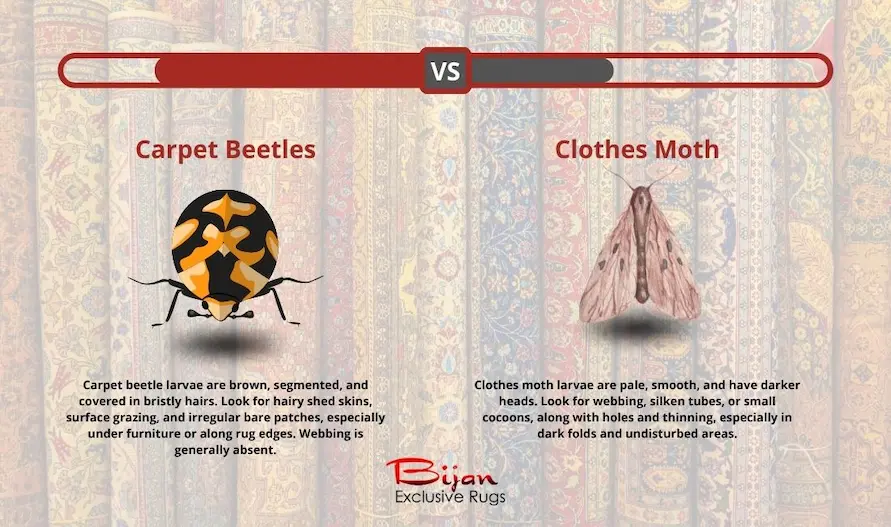
Carpet Beetles or Clothes Moths: How Can You Tell?
Carpet beetles or clothes moths can eat wool or silk rugs, but they leave different evidence. The first thing I recommend when choosing a treatment for any pest is to determine what the pest is.
Carpet beetle larvae are usually brown, visibly segmented and covered with bristly hairs. Their empty, hairy skins can remain on the rug after moulting.
Clothes moth larvae are white to cream-coloured and have darker heads. They are smoother and may make webbing, silken tubes or little cocoons.
| Evidence | Carpet Beetles | Clothes Moths |
|---|---|---|
| Larvae | Brown and hairy | Pale and smoother |
| Shed Skins | Bristly and hollow | Less noticeable |
| Webbing | Generally absent | Often present |
| Cocoons | Not normally visible on rugs | May appear near folds or edges |
| Damage | Surface grazing and irregular bare areas | Holes, thinning and grazed pile |
| Common Location | Under furniture and rug edges | Dark folds and undisturbed areas |
Check the Evidence
Save a sample in a closed container or take a photo before researching how to kill carpet beetles. A pest-management professional or rug specialist can then help determine what you’re dealing with.
Inspect the Rug and Find the Source
To find an effective way to get rid of carpet beetles, you need to locate the source. I suggest moving light furniture and checking out the rug under good lighting.
Check under furniture such as sofas, cabinets, or other seldom-moved furniture. University of California Integrated Pest Management recommends checking hidden areas and removing accumulations of lint, hair and dead insects that can feed larvae.
Check wool furnishings, cupboards and air vents, as well as wardrobes and stored textiles, pet bedding and nearby wool furnishings.
If larvae or food are present elsewhere in the room, removing the visible rug won’t be enough to remove carpet beetles.
Isolate the Affected Rug
Isolate the rug if larvae or damage are observed before beginning carpet beetle control. Bijan Exclusive Rugs advises carefully rolling the rug rather than dragging it through the house.
Follow these steps:
- Do not shake the rug indoors, as larvae, shed skins and debris may spread.
- Seal smaller affected items in bags or suitable protective wrapping.
- Keep the rug away from unaffected rugs, clothing and stored textiles.
- Avoid tightly folding handmade or fragile pieces.
The Western Australian Museum has collection-care guidelines that suggest infested material should be isolated to reduce the likelihood of pests spreading.
Pay special attention to antique rugs. Their foundations may be weakened, previously repaired or made with delicate dyes. Before using chemicals or heat, consult a rug expert familiar with handmade construction.
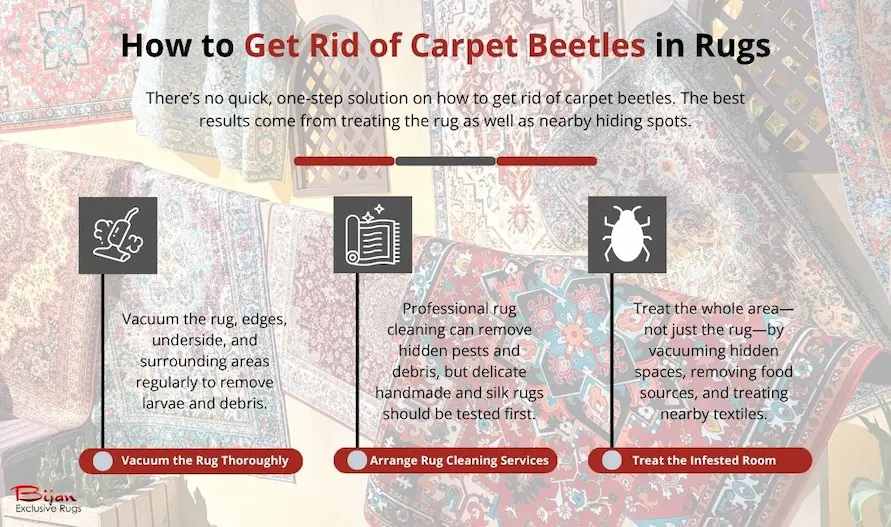
How to Get Rid of Carpet Beetles in Rugs
When I get calls asking how to get rid of carpet beetles, my first comment is that there is no single quick solution. Treating the rug and all nearby hiding spots yields the best results.
Vacuum the Rug Thoroughly
Start by vacuuming the rug carefully. Cover the:
- Front and reverse side
- Outer edges
- Floor underneath
- Nearby skirting boards
- Areas beneath furniture
Use controlled suction and avoid running powered brushes over delicate fringes and/or weak piles. Dispose of vacuum contents outside in a secure container (sealed bag). This keeps larvae and debris from getting back into the machine.
As a measure of carpet beetle control, the University of California Integrated Pest Management Program advises vacuuming rugs, upholstered furniture, and the areas around them regularly.
Arrange Appropriate Rug Cleaning
Vacuuming is essential, but it can’t remove insects or dirt hidden deep in the rug. Professional rug cleaning can help to remove larvae, shed skins, eggs and organic food consumed by larvae.
Do not soak a handmade rug before testing the colours. Steam cleaning is not suitable for every piece either. Fibres can change shape from heat, moisture, and incorrect cleaning products.
Silk rugs can be particularly sensitive to moisture, heat and rough handling. Before washing and/or spot treating, vegetable dye rugs should also be evaluated for colour fastness.
Treat the Infested Room
Learning how to kill carpet beetles means looking beyond the rug. Vacuum cracks, cupboards, vents, furniture and skirting boards. Eliminate pet hair, old cobwebs, dead insects and lint. Wash or treat nearby textiles that are likely to be affected, using the appropriate care.
If you use a pesticide in Australia:
- Choose one registered and labelled for the intended indoor use.
- Follow every application and ventilation direction.
- Keep children and pets away for the period stated on the label.
- Never apply more than recommended.
- Check that the product is suitable for rugs and upholstery.
Health Victoria recommends reading pesticide labels and following the instructions. The Australian Pesticides and Veterinary Medicines Authority also stipulates that product instructions should clearly indicate where and how treatments should be applied.
If the infestation occurs throughout the carpet, or is likely to reappear, call a licensed professional pest management company and let them provide specialised treatment for the rug.
Together, these methods give you a better chance of getting rid of carpet beetles permanently.
Should You Use Insecticide on a Valuable Rug?
If someone asks me what kills carpet beetles instantly, I warn them against spraying the first carpet beetle that they see on their valuable rug. Insecticide can kill exposed insects, but it can harm the rug if it isn’t appropriate for the rug’s material.
Understand the Risks
Applying insecticide directly to a handmade rug may result in:
- Colour changes or bleeding
- Dry or weakened fibres
- Chemical residue
- Persistent odours
- Uneven staining
- Exposure risks for children and pets
Before treating an authentic Persian rug, I recommend confirming its fibres, dyes, age and construction. Previous repairs and/or wool, silk, cotton bases may react differently to chemicals and moisture.
Follow the Australian Label
Use only a product registered for the pest, indoor setting, and surface.
Never:
- Combine different pesticides
- Apply more than the stated amount
- Use a product on rugs when the label does not permit it
- Allow children or pets to enter before the recommended time
I recommend having your collectible or high-value rugs evaluated before chemical treatment.
Actually, carpet beetle removal from valuable rugs is a more delicate process than how to kill carpet beetles. The idea is to eliminate the infestation while preserving the rug you’re attempting to maintain.
When to Call a Professional
I recommend professional help when:
- Larvae continue appearing after thorough cleaning
- Several rooms or textiles are affected
- You cannot locate the source
- The rug is handmade, antique, silk or particularly valuable
- You are unsure about using pesticides safely
Two specialists may be necessary. A licensed pest management technician can inspect and treat the property, and a rug specialist can evaluate, clean, and protect the affected rug.
I suggest taking photos of all holes, bare spots, and thin areas of the pile before treatment. If the rug sustains significant damage, it could change its condition, market value, and/or insured value. A professional rug valuation can document these changes.
In severe cases, it is often best to get professional help to remove carpet beetles permanently.
Can a Carpet-Beetle-Damaged Rug Be Repaired?
Yes, there are several ways to repair carpet-beetle-damaged rugs. The first step is to evaluate the severity, location, and extent of the damage.
Possible repairs include:
- Securing weakened sections
- Restoring small areas of missing pile
- Rebuilding damaged foundations
- Reweaving larger holes
- Repairing worn edges or fringes
Severe damage doesn’t always mean it needs to be thrown away. However, before restoration, you need to control the infestation. If not, repaired fibres can be attacked again.
Avoid cutting loose threads or applying household glue. These quick fixes can distort the weave, discolour fibres, and hamper professional restoration. The Western Australian Museum advises that little should be done to valuable textiles without first consulting a conservator.
Knowing how to get rid of carpet beetles permanently safeguards your rug and prevents future attacks. With careful repair, it will retain its structure, appearance, and history for many more years.
How to Prevent Carpet Beetles from Returning
Once an infestation problem is under control, regular rug cleanings are your best weapon. People often ask me how to get rid of carpet beetles permanently, and I tell them prevention comes from removing food sources and disturbing the dark areas where the larvae like to hide.
Vacuum Regularly
Rotate furniture frequently and clean the area for pet hair, lint, crumbs and dead insects. To minimise carpet beetle activity, regularly clean rugs, upholstered furniture, and draperies.
Rotate and Inspect Rugs
Turn rugs around every so often to allow previously shaded areas to get light and regular cleaning. Inspect areas of the back, fringes and edges for larvae, shed skins or new damage several times a year.
Watch closely during the warmer months and after bringing used rugs, furniture or stored fabric into your house.
Oversized rugs can be challenging to lift, rotate, and safely inspect, so that you may need two people or professional support.
Store Rugs Properly
Before storage:
- Arrange appropriate cleaning
- Allow the rug to dry completely
- Roll it rather than folding it sharply
- Use wrapping recommended by a rug professional
- Store it away from damp areas
The Canadian Conservation Institute recommends storing clean, dry rugs rolled rather than folded.
Reduce Entry Points
Fix broken flyscreens and patch holes around skirting boards, windows and doors. Legally remove nests of birds and insects safely near the home; call a suitable expert.
Protect Your Rugs from Further Damage
To protect your rug, identify the pest, isolate the affected piece and vacuum both sides thoroughly. Clean the surrounding room and address hidden areas where larvae may remain. Valuable wool, silk, antique and handmade rugs need especially careful handling.
At Bijan Exclusive Rugs, we provide professional rug cleaning, inspection and repair advice. You can also explore our rug collection when searching for a distinctive handmade piece for your home.
Contact us for an assessment before applying strong chemicals or discarding your rug.