

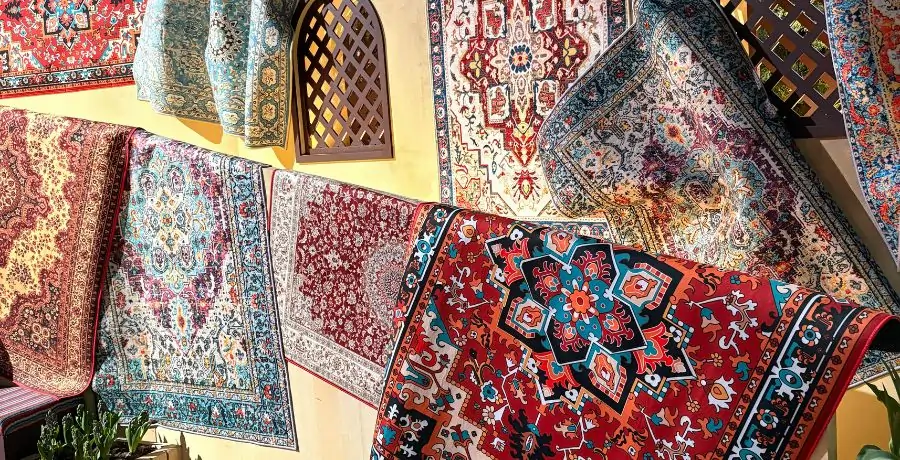
Previously known as Persia and currently Iran, it has a rich history of art, and its rugs are among the region’s most significant cultural products.
The amazing workmanship, fine rug patterns, and the wide range of Persian rug styles are among the reasons these pieces remain at the top of the global rug market.
The history of this centuries-old art began with nomadic tribes and village weavers, who developed early rug patterns that were spread across borders through trade and cultural exchange.
Today, these masterpieces are admired worldwide. Discover remarkable Persian rug styles and authentic Iranian patterns with Bijan Exclusive Rugs‘ curated selection.
This blog will highlight various rug options and help you choose a piece that suits your space and style.
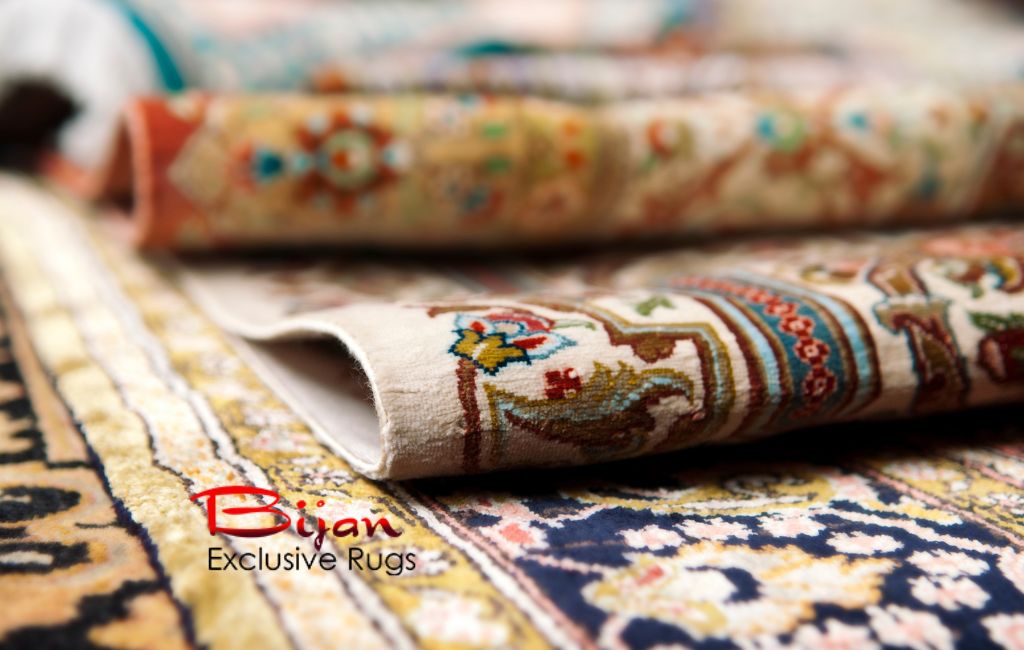
Persian Carpet Types
Persian rugs are handmade and handwoven or hand-knotted by the craftsmen of Iran. Hand-knotted pieces are especially popular worldwide for their durability and craftsmanship.
The region significantly contributes to rug patterns, colour, texture, and overall design. The types of Persian rugs are usually divided into three major categories:
- Nomadic or Tribal rugs
- Village
- Traditional
These various approaches to the production have led to the large variety of Persian rug styles today.
Despite all of them having their roots in Ancient Persia, the three parallel traditions have produced impressive diversity. This implies that there is a Persian-style carpet to suit almost all tastes.
But how do you know the different types of rugs and various rug styles in the current market? You will understand it better by the time you finish this guide.
Below are some characteristics of each category to help you identify and enjoy the real Persian carpet styles with confidence.
Persian Carpet Designs
The most recognised rug patterns in traditional Persian rug styles include:
- Floral
- Allover
- Geometrical
- Medallion
- Herati
- Boteh
- Tribal
- Open Field
- Birds & Flowers
- Hunting
- Garden Design
- Pictorial
- Tree of Life
So how many rug patterns did you notice?
The impressive diversity of oriental and Persian carpet styles is explained by the fact that carpet weaving started more than 2,500 years ago in Iran.
Over time, Iranian culture and changes in Iranian patterns were incorporated into every Persian-style carpet, giving rise to the variety of rug styles and the exclusive rug designs we observe today.
Persian Rug Patterns
What are your favourite types of rug designs? Are Persian rugs the best? The beauty of Persian rug styles lies in the fact that there is something to please every taste, from bold tribal motifs to intricate floral patterns.
The good news is that we have at least one item of each of the time-honoured Persian carpet styles and traditional Iranian patterns (except for a few), so you’re sure to find a Persian-style carpet that fits your area and taste.
Remember: all the hand-knotted Persian rugs are one-of-a-kind creations. When a specific design catches your eye, do not wait long to get it before someone else takes it. Shop now!
How are Persian Rugs Made?
The production of Persian rugs is an art that requires great skill, patience, and accuracy. One of the reasons their designs are exquisite and their materials the finest is that they are in high demand.
The weaving on these rugs is beyond compare, and it has been passed down through generations, continually refined by artisans in Iran.
Wool, cotton, and silk are the primary fibres used in crafting Persian rug types.
One of the oldest and most widely used durable rug materials is wool, known for its strength and excellence, especially from the higher regions of Iran.
Cotton is the second undertaker, a strong, comfortable option often used in numerous Persian-style carpets due to its accessibility and practicality.
Silk, being a premium rug material, is used less frequently and typically reserved for high-end pieces.
Silk rugs are also commonly mixed with other fibres to add detail and increase the overall feel and look of various rug styles.
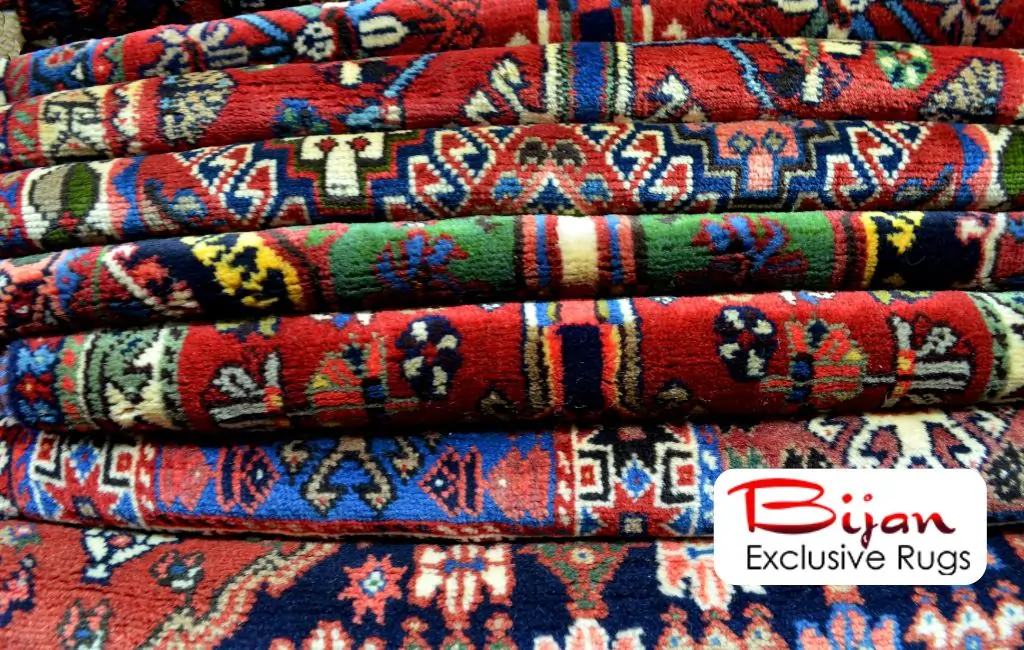
Types of Persian Rug Designs
In earlier times, these handcrafted pieces were considered luxurious and were often given as gifts.
Royal families employed them as prayer mats, diplomatic gifts, and signs of allegiance, and the antique versions were never similar, so one could not find two identically designed carpets.
Examine the various Persian rug styles to find the ideal option for your house or workspace.
However, despite all having the same origins, the pieces differ in design and artistic expression.
Pazyryk
History shows that the earliest known specimen of a Pazyryk rug was found in the tomb of a Scythian.
Nowadays, it is generally accepted that this is the oldest surviving example of a hand-woven carpet with early Persian design and craft elements.
Bhaktiari
These rugs are named after a primitive nomadic tribe that once inhabited the Zagros Mountains.
Bhaktiari rugs are made of high-density, plush wool and are reputed to be strong, durable, and long-lasting.
The style has developed over time from traditional geometric designs into more vivid floral patterns, and its scope has been expanded to include various rug styles and Persian rug styles based on localities in Iran.
Bakshayesh
Bakshayesh is an ancient weaving area in contemporary Azerbaijan and Iran and is considered one of the oldest rug production centres.
The abundance of artistry and strong cultural expression praises its works. Persian rug patterns often depict images of traditional tribal life and classic artistic details of Iran.
Also known as Bakshish, these works are usually larger than most other works in the region.
Their rug styles focus on central folklore characters, with subtle details mixed with rustic, asymmetrical patterns.
Bijar Rugs
Bijar rugs are produced in a famous trading centre in northwestern Iran, about 150 miles south of Tabriz.
They are made in the traditional Turkish style and share some similarities with Kurdish carpets, particularly in their thick, heavy pile.
Their tight construction and weaving method make them very durable and constructed to last several years.
The constrained zig-zag makes the pile stand tall and straight, forming a notable example within both classic and enduring Persian rug styles.
Isfahan
Isfahan or Esfahan was the capital of Persia from 1598 to 1722. The city is today praised for its Safavid-era architecture and is a UNESCO World Heritage Site.
The pieces of Isfahan are characterised by their sophisticated floral designs, central medallions, and balanced corner designs.
Isfahan rugs are often woven with fine wool and precise silk accents, reflecting high-fashion Persian rugs.
Farahan
Farahan is a small village in central Iran that came into the world’s limelight in the 19th century for producing some of the most sophisticated rugs of the era.
The initial production of these works was aimed at the international market, especially the high-end customers in the United States.
Modern Farahan rugs are particularly appreciated for their colour tones and elaborate detailing, which are extremely hard to copy nowadays. The natural colouring of the dyed colours of the old examples has a specific history.
Gabbeh
Gabbeh rugs are known for their bold geometrical shapes and narratives.
Gabbeh is translated as ‘raw,’ ‘natural,’ or ‘uncut’ in Farsi. Still, in practice, nomadic tribes of the Qashqai people in southern Iran make these carpets, and women commonly weave them.
They are usually done in plain rectangular designs, incorporating imagery inspired by animals, nature, and the everyday life of the tribe.
Heriz/ Serapi rugs
Heriz and Serapi rugs have a reputation for being highly durable and made of high-quality wool. The large geometric medallion placed in the centre of the design is used to identify them readily.
The classical design of Heriz has retained, over the years, its firm rectilinear medallion pattern with minor modifications.
They contain fewer repeating motifs; the pile is denser and tighter; and the edges are usually reinforced with a double selvage. This is distinctive to classic Persian rug styles and is durable across rug styles in Iran.
Kashan/ Mohtashan
The distinctive features of Kashan rugs include a bright central medallion and colour palettes dominated by red, blue, and beige colours.
Their sophisticated Persian-style carpets are highly rated for tight knotting, skilled craftsmanship, and the use of high-quality wool, which makes them pricier in the market.
Kashan weaving traditions were as old as the Golden Age of Iranian carpet weaving under Shah Abbas, which greatly influenced the traditional rug art in Iran.
Today, these works are considered the most admirable samples of classic Persian rug styles.
Kerman
Kerman rugs are known for their deep red colour and are often paired with neutral colours such as beige, blue, or brown.
Most of them have long central medallions with elaborate floral designs, imparting a traditional Persian rug feel and design elements.
Originating from south-central Iran, Kerman rugs are normally woven on a cotton foundation with an asymmetrical knot.
New versions made to appeal to international markets tend to be more lenient with the colour palette, while still maintaining their skilled craftsmanship.
Khorasan/Mashad
The Mashad and Khorasan rugs of the city are usually woven from cotton and wool.
The Persian Jufti knot, which uses four warp threads rather than the usual two, has been used by weavers since the sixteenth century and makes the process of creating fabric more productive.
Khotan
Khotan, in East Turkestan, now in the Xinjiang area of western China, was a hub for rug manufacturing and design.
It was also one of the first locations to grow silk outside of China and a significant cultural intersection along the Silk Road over the centuries.
By the 18th and 19th centuries, Khotan had produced a highly elaborated weaving tradition shaped by diverse influences.
Khotan rugs blend Chinese and Persian influences, presenting a hybrid aesthetic inspired by proximity to both cultures.
Such a combination leads to harmonised compositions using vivid colour choices and contrasting products.
Malayer
An angular northwest style, characterised by its variety of styles and colours, is embodied in antique rugs from the Malayer region.
These carpets have a stunning variety of classic carpet designs, from lozenge-shaped medallions to thick allover motifs, all set against stylish monochrome backgrounds.
Malayer rugs can range in quality from good to poor, depending on the pattern, wool quality, age, and knot count.
Depending on the pattern, wool quality, age, and the number of knots, the malayer rugs may be of good quality or poor quality.
Sarouk
Sarouk rugs are very popular items in the Persian rug market. They are constructed on a cotton base, and their sophisticated craftsmanship has made them regarded as among the best carpets made in the region.
Sarouk rugs are unusual in that, unlike most other styles, they are always made with cotton as their base material rather than wool.
They have a lightweight yet strong construction, are usually blue in the weft, and have a unique texture that makes them hard to imitate.
Senneh
The most popular feature of Senneh rugs is the high level of geometric motifs and strict craftsmanship.
They are characterised by a full colour palette of deep shades of crimson, navy, and brown and belong to the mountainous country of Kurdistan in northwestern Iran.
The pile of these rugs is usually of fine wool, while the warp and weft are of simpler foundations of cotton.
They intend to last long and serve a purpose, and are usually rough-textured but built to withstand daily use.
Sultanabad/ Mahal
Sultanabad rugs of the 19th and early 20th centuries have since become highly sought-after items in the collector and designer market of the modern generation.
They are highly sought after for their combination of historical significance and design versatility, making them appealing not only to rug enthusiasts but also to interior specialists.
What is notable about these works is the balance in their compositions and their futuristic style, which remains modern today.
Due to the lack of original vintage examples, it is now more difficult to find well-preserved ones, and most are becoming harder to find.
Tabriz
Tabriz rugs were among the ancient and most powerful centres of rug production.
The main features of these pieces include a tight knot and a compact, low-pile, which enhance the refinement and lasting quality of these products.
Tabriz rugs are packed with a wide variety of elaborate designs, with their flowing curvilinear motifs, garden motifs, floral compositions, hunting imagery, and Medallions of various shapes and sizes.
Lori
Lori rugs are made in the Lorestan province of western Iran and are widely appreciated for their craftsmanship and quality.
These pieces frequently feature bold colour combinations along with floral and geometric patterns that indicate regional art.
Lori rugs are typically produced in traditional methods passed down through generations and are usually handwoven.
A lot of them are flat-woven, i.e., without a raised pile, and are made without knots. This construction makes them light, while still reminiscent of Persian rug style and distinctive regional rug styles.
Nain Rugs
Nain rugs are known for their superior quality and are characterised by very fine wool and extremely high knot density of 300-700 knots per square inch (KPSI). Their work makes them one of the more refined examples of ancient weaving.
The designs are usually typical of fine interweaving of branches in blue or green, and are adorned with miniature flowered motifs against light ivory or white backgrounds.
Qum Rugs
Otherwise known as Koum, Kom, Kumm, Qhum or Ghom, these rugs are made in the Qom province of Iran, and are generally considered to be of high quality and refined detailing.
The designs of Qum rugs feature floral patterns, birds, medallions, hunting motifs, and garden motifs, mostly in several deep blue, reddish brown, or orange colours.
Explore the Persian Rugs Collection at Bijan Exclusive Rugs
If you’re searching for premium Persian rugs, you’ve come to the right place. Bijan Exclusive Rugs offers an exclusive rug collection of authentic Persian rug styles, featuring a wide selection of colours, materials, and knot densities to suit different tastes and spaces.
You are in the right place if you are looking for high-end Persian rugs.
Bijan Exclusive Rugs has a unique line of original Persian rug styles, showcasing a wide selection of colours, materials, and knot densities to meet the preferences of our customers and spaces.
Contact us to find the rugs that speak to you the most.