

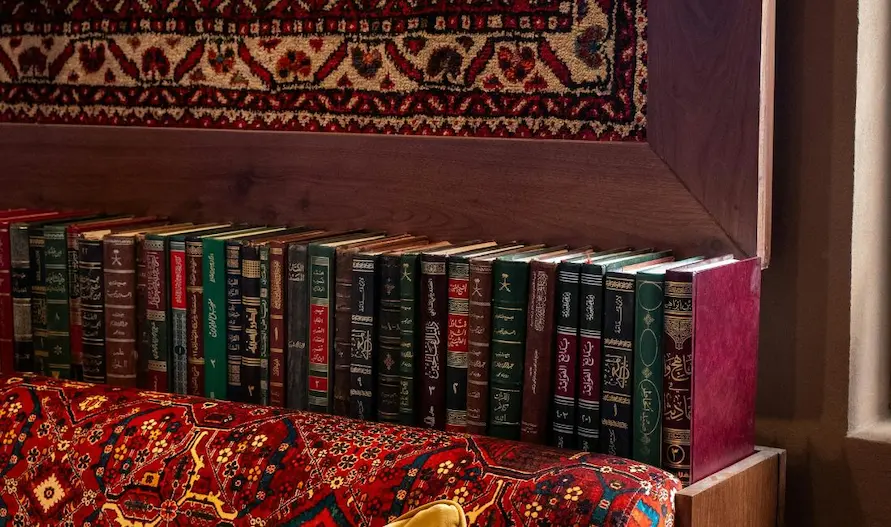
If you’ve ever admired the intricate patterns of a Persian rug or the delicate sheen of a silk piece, you might have wondered how to bring that beauty off the floor and onto your walls.
Displaying a rug on a wall has become an increasingly popular way for homeowners, collectors, and interior design enthusiasts to strikingly showcase craftsmanship, heritage, and artistic design.
This guide explains how to hang a rug on the wall, including the best methods, what mistakes to avoid, and how to protect your investment over the long term. The right approach depends on the rug’s size, weight, material, and value.
Many collectors explore curated rug collections to find pieces that work beautifully as wall features.
By understanding how to hang a rug on a wall properly and choosing the right rug hanger or support system, you can turn a treasured piece into a timeless focal point that elevates your home’s interior.
Choosing the Right Rug to Hang on Your Wall
One of the first things I tell customers when they ask me how to hang a rug on the wall is that it’s only half the job done. Choosing the right rug is just as important.
However, not all rugs will fit as wall-hanging rugs. The dimensions, material, design, and condition of the piece are all factors that affect its appearance and longevity.
- Choosing the Right Rug Size for Your Space: One of the most important considerations when hanging a rug on the wall is its size. Large rugs can make a great attention-grabbing wall. Smaller rugs can be used in smaller spaces to add warmth without taking over the room.
- Choosing the Right Rug Material: A popular choice is wool, as it is naturally hardwearing, resilient, and easy to care for. They are strong and can be used in many long-term displays. The fine details, smooth texture and natural sheen of silk rugs can produce a beautiful impact on a wall. Silk fibres, however, are more fragile and must be handled and mounted with special care.
- The Textile Conservation Centre advises that unnecessary stress, stretching or harm to the fibres be avoided by providing suitable support when displaying textiles.
- Consider the Rug’s Age, Design, and Character: Traditional patterns can add heritage and elegance, while contemporary designs can work beautifully in modern Australian homes. Statement colours can also transform an empty wall into a strong visual feature.
- Extra considerations are needed when dealing with antique rugs due to their age, artistry and possible value. The pieces may require special mounting to maintain their condition and to enable their beauty to be captured for display.
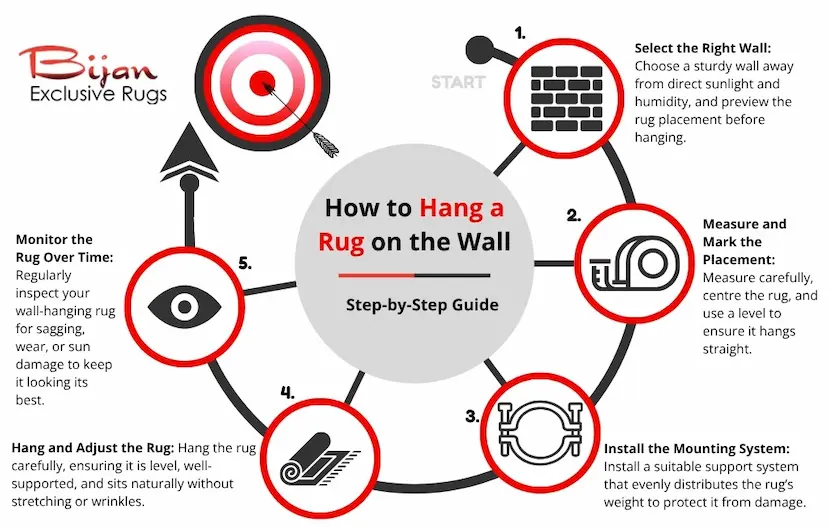
Step-by-Step Guide: How to Hang a Rug on the Wall Safely
Careful planning is required to ensure the rug on the wall display stays safe while also making it an eye-catching feature in the room.
I recommend spending some time preparing before starting any installation project involving hanging wall rugs. With the right location, mounting and framework, your rug will stay in place and look its best for years to come.
Step 1: Select the Right Wall Location
The first step is to choose where to display your wall-hanging rug.
Try not to leave the rug in places exposed to direct sunlight or UV rays for extended periods, as this can cause colour fading and weaken textile fibres over time. It’s also preferable to keep it away from overly humid rooms.
Be sure to find a stable wall that will hold the weight of the rug and mounting system. A large rug can be quite heavy, and the wall structure must be sufficiently strong before installing the rug.
When you are not sure how a particular rug size will look in your home, it is best to use a rug visualiser before installing the rug to see how it will look in different positions, sizes, patterns and colours.
Step 2: Measure and Mark the Placement
Before installing your hanging rug, I always recommend measuring carefully.
Firstly, identify the centre of the wall and the centre of the rug. This helps achieve a harmonious look, particularly when hanging the rug above a sofa, bed, or console table.
Use a level to ensure the mounting position is straight. Even a slight angle can become noticeable once the rug is installed.
Step back periodically and take a look at the placement from various perspectives. The aim is to create a natural-looking rug wall hanging in the room.
Step 3: Install the Mounting System
Once the location has been decided, the next step is to install the appropriate support system.
Depending on the rug’s size, weight, and value, this may include:
- A fabric sleeve and rod system
- Velcro mounting
- A professional textile support system
A good rug hanger will distribute the rug’s weight evenly, rather than placing excess weight on a single area.
For valuable handmade items, I would always recommend a method that preserves the item. Proper techniques for displaying textiles are crucial, as improper support can cause stretching, distortion, and long-term damage.
Step 4: Hang and Adjust the Rug
Now comes the exciting part — seeing your rug become part of the room.
Place the rug carefully on the mounting system and ensure that it is level. The rug should not be pulled, stretched, wrinkled, or subject to any concentrated weight.
Adjust the position until the design looks balanced and the rug sits naturally against the wall.
A properly installed hanging rug should appear relaxed and supported, not strained.
Step 5: Monitor the Rug Over Time
Even after installation, your rug still needs occasional attention.
I recommend checking:
- Whether the rug is starting to sag
- The condition of the mounting points
- Any changes in colour caused by sunlight exposure
- Signs of stress around edges or corners
With regular checks, you can help protect your investment and ensure your wall-hanging rug looks beautiful.
Knowing how to hang rugs on the wall will help you appreciate your rug’s craftsmanship without harming it. When done correctly and with appropriate support, hanging rugs can be one of the most striking design elements in an Australian home.
Different Methods for Hanging a Rug on the Wall
“What is the safest way to mount it?”
The answer depends on the rug’s size, material, age, and value.
When it comes to hanging rugs, we always suggest picking a method that supports the rug. The ideal wall-hanging rug is designed to evenly distribute weight, prevent fibre damage, and enable the beauty of the design to be enjoyed without undue stress.
Here are some of the most common methods used for hanging rugs.
Method 1: Rug Hanging Rod and Sleeve
A rod-and-sleeve system is one of the most trusted methods for long-term rug wall hanging.
In this method, the back of the rug is held in place by a robust fabric sleeve. Then a rod is inserted into the sleeve and attached to the wall brackets to evenly distribute the rug across its width.
The huge benefit of this technique is that the weight is spread over a larger surface area, rather than on individual spots. It is often used for luxury handmade rugs and other decorative items that require special care.
Use appropriate support methods and take into account distortion and damage from weight distribution when hanging textiles.
Best suited for:
- Valuable handmade rugs
- Large decorative rugs
- Antique pieces requiring careful support
Method 2: Velcro Mounting System
A Velcro mounting system is another popular choice, especially for larger rugs.
This technique involves securely fastening one piece of Velcro to a backing board or wall reinforcement, then carefully placing the matching strip on the back of the rug. The system helps keep the rug level and even aligned across its width when installed properly.
Many collectors prefer this method as it helps reduce sagging. It also makes removing the rug much easier if it needs to be cleaned, inspected, or moved in the near future.
Best suited for:
- Large wool rugs
- Wide wall displays
- Rugs that may need occasional removal
Method 3: Rug Clips or Hanging Rings
For lighter decorative rugs, clips or hanging rings can be a simple solution.
These systems have multiple small points where the rug is attached to the wall. They can be a good choice for lighter items, but are generally not the first choice for valuable handmade rugs.
This is because if the rugs are not placed correctly, they will develop pressure points, and over time, some parts of the rugs will be pulled.
If you are considering this option, make sure the clips are strong enough to support the rug’s weight and are evenly spaced.
Best suited for:
- Lightweight decorative rugs
- Smaller pieces
- Temporary displays
Method 4: Curtain Rod Style Hanging
A curtain rod-style system is another casual approach to displaying a rug on the wall.
As with the rod-and-sleeve method, the rug is held in place with a rod behind and/or through it. This makes it simple to modify the placement and to use for casual decorative applications.
But the support still needs to be equal to the rug’s weight. Heavy rugs should not be put on a light rod or unsupported hardware.
This can be a great choice for bedrooms, reading rooms or general living rooms where the rug is being used primarily as a design element.
Best suited for:
- Smaller rugs
- Decorative wall displays
- Flexible installations
Common Mistakes to Avoid When Hanging a Rug
When customers ask me how to hang a rug on the wall, I always remind them that the goal is not only to create a beautiful display but also to protect the rug itself.
I have witnessed the impact the wrong installation method can have on a beautiful rug. When displaying a rug on a wall, it is important to ensure the rug itself stays supported, balanced, and protected.
Here are some common mistakes I recommend avoiding when creating a wall-hanging rug feature:
- Using Nails or Tacks Directly on the Rug: The one thing that I often see wrong is nailing a rug directly to the wall with nails, pins or tacks. It can cause areas of pressure that can pull on individual fibres. This may cause the rug to stretch, weaken, and be damaged permanently over time.
- Hanging Heavy Rugs Without Proper Support: Bigger, heavier rugs require an adequate mounting mechanism. Even weight distribution is important, or the rug could droop or be overburdened in some spots. Oversized rugs can make for great statement walls, but the larger they are, the more they demand from the wall’s support and placement to stay safely displayed.
- Ignoring Sun Exposure: The sun can cause your rug to change in colour and condition over the years. Light exposure is one of the main causes of deterioration of textiles and other sensitive materials.
- Choosing the Wrong Rug Size: If a rug is too small, it can get lost on a large wall; if it is too large, careful planning is necessary to avoid making the room unbalanced.
When deciding how to hang rugs on the wall, I always encourage homeowners to consider the entire room. When hanging rugs, the correct size, placement and rug hanger system will make the rug look intentional without compromising the craftsmanship.
How to Style a Wall-Hung Rug in Australian Homes
One of the most powerful ways to transform a room is to choose a quality rug for that space.
People always ask me how to hang a rug on the wall, so I also suggest considering where to place the rug. If it’s positioned correctly, the rug will draw attention to its quality and fit in with the design of your space.
Living Rooms
One of the most common places for a wall-hanging rug is the living room. Rugs can serve as a natural focal point (like paintings) when positioned over a sofa or over a large blank wall.
A smart choice of wall rug can create a space in an open-plan home without cluttering the environment. Whether traditional or modern, rugs can add warmth and heritage to your interiors, while classic patterns with updated colour options suit contemporary Australian rooms.
Bedrooms
A hanging rug behind the bed can lend a soft, plush background and texture to the space. This is especially effective in bedrooms with neutral-coloured designs, as the rug stands out as a focal point to support the overall atmosphere.
This is often preferred by homeowners due to the warm, cosy atmosphere it evokes, which is more personalised than standard wall art.
Entryways
One place people don’t think of is the entryway, which is ideal for displaying a unique hanging wall rug. A smaller rug placed close to the front door will make a big difference by giving guests a taste of your personality and adding character.
Runner rugs can also be hung vertically in narrow spaces, such as hallways, to utilise the available wall space and add colour and detail.
Offices and Study Areas
Home offices and study areas can also be great places to install a wall-mounted rug. It provides softness, texture, and interest, as well as an inspiring, comfortable atmosphere.
Before deciding how to hang a rug on the wall, consider the room’s current colours, lighting, and furniture. If a rug is made of natural materials, it will be more aesthetically pleasing with the coastal influence and neutral colours that are common in the Australian interior.
Final Thoughts: Displaying a Rug as a Work of Art
Hanging a rug on the wall is more than just a decorative choice; it’s a way to celebrate craftsmanship, colour, and history. A thoughtfully installed wall-hanging rug becomes a statement piece, drawing attention to intricate patterns and textures that might otherwise go unnoticed.
When considering how to hang a rug on the wall, it’s important to take the rug’s material, size, weight, and value into account. Using the right rug hanger or support system ensures the piece is safely displayed, while proper preparation, cleaning, and handling protect it from damage over time.
At Bijan Exclusive Rugs, we offer a wide range of high-quality pieces perfect for hanging wall rugs, from Persian and antique rugs to modern and silk designs. Whether you’re looking for a bold feature piece or a subtle accent, we can help you find the ideal rug for your space.
Those looking to add a statement piece to their home can explore current rug sale collections featuring handcrafted designs and speak with our specialists for expert advice on selecting, displaying, and caring for their rugs.
Turn your walls into a gallery that showcases the beauty and artistry of fine rugs — safely and stylishly. Contact us now!