

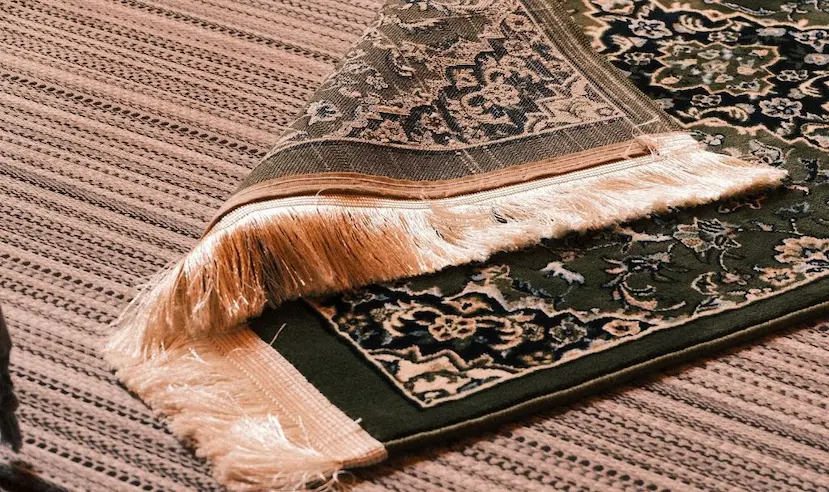
Wondering how to layer rugs without making a room feel crowded? Rug layering involves placing two or more rugs together to add warmth, colour, texture and definition to an interior.
The rugs do not need to match perfectly. In fact, overlapping rugs look more interesting when they have distinct personalities. They simply need one connecting feature, such as a shared colour, similar shape, complementary texture or related design character.
Layering rugs can work beautifully over timber, tiles, polished concrete and even carpet in Australian homes. The secret is choosing the right proportions and placement.
In this guide, I’ll explain how to select a base and feature rug, mix patterns and textures, create layered rugs in living room settings and avoid common mistakes. Browse our rug collections for different sizes, designs and weaving traditions.
What Does It Mean to Layer Rugs?
When customers ask me how to layer rugs, I explain it as placing two or more rugs together and treating them as one rug design. Rug layering can involve layering rugs, placing a small rug on top of a neutral or decorative rug, or overlapping rugs to define zones in an open-plan home.
Why try it?
- Add depth, texture and visual interest
- Soften timber, tile or polished concrete floors
- Highlight a rug with exceptional colour or craftsmanship
- Connect furniture, artwork and accessories
- Create separate living, dining or reading zones
YourHome also advises the Australian Government on using rugs on cold floors to make them feel warmer.
When layering rugs, you can use a distinctive handmade Persian rug as the top layered rug and focal point.
For layered rugs in a living room, simplicity is the key. Pick one design, leave the base visible and give each rug room to breathe. This makes it easier to layer rugs without the space feeling crowded.
Start with the Right Base Rug
A good foundation provides structure for rug layering. When helping a customer layer rugs, choose the foundation before falling in love with the decorative top layer.
Choose a Suitable Size
Start with a rug big enough to anchor the primary furniture layout. In a lounge, it will typically be placed under the front legs of the sofa and armchairs.
Before buying, measure:
- The room’s length and width
- The main furniture arrangement
- Door and walkway clearance
- The dimensions of the upper rug
Leave an exposed base area around the layered rug. Otherwise, the layout may appear as if the rug was placed on top of another to cover it. An oversized rug can help anchor the space in a large lounge area or open-plan Australian home.
Select a Restrained Foundation
I typically recommend a simple neutral base that is light in colour or has a light print or subtle texture. This gives the top rug room to be the focal point without cluttering the space.
Wool, jute and flatwoven pieces can all work, but consider:
- Comfort underfoot
- Expected foot traffic
- Cleaning requirements
- The thickness of both rugs
A modern rug can perfectly fit under a more intricate traditional rug.
Consider the Room’s Shape
You can overlap rectangular rugs, but that’s not the only option. Square rugs can work in square rooms, reading corners or small seating areas. Don’t force all the layered rugs in the living room into the same rectangular pattern; let the shape be determined by the architecture.
Choose the Feature Rug
This is where rug layering turns more personal. I suggest a top rug that is more expressive and smaller than the bottom rug. It might feature a striking pattern, refined texture, unusual shape or a design with personal meaning.
Art, culture and history have been associated with textiles and rugs since ancient times. Museums like the Metropolitan Museum of Art store rugs as decorative art, which is a good reminder that a feature rug can be more than just another floor covering.
Find a Rug Worth Highlighting
Customers often ask me how to layer rugs, and I recommend finding the rug they want people to see first.
Consider:
- A richly patterned Afghan rug over a neutral wool foundation
- A finely detailed Turkish rug in a bedroom or reading corner
- A softly coloured vegetable dye rug for a quieter, more understated arrangement
The right choice should bring the colours, furniture and character of the room together.
Experiment with Placement
No rule says the upper rug must sit precisely in the centre. Try placing it:
- Centrally for a balanced, formal look
- Slightly offset for a relaxed setting
- Diagonally to draw attention to its shape and pattern
For layered rugs in a living room, I often favour a slight offset beneath the coffee table. It feels natural while keeping enough of the base visible.
Avoid layering rugs of almost identical dimensions. If the border isn’t defined, it can look accidental. With both layered and overlapping rugs, each layered rug should have enough space to be appreciated.
How to Mix Rug Colours, Patterns and Textures
These are some of the basic elements you can use to create a visual composition, as described by the Getty: colour, pattern, and texture. These rules come in handy when deciding how to layer rugs in the house.
Find a Shared Colour
Start by looking for a colour that’s present in both rugs. It doesn’t have to be an exact match. For instance, a rust-red detail may complement terracotta, burgundy or warm brown.
Look around the room for inspiration:
- Timber flooring or furniture
- Cushions and upholstery
- Artwork and decorative pieces
- Curtains and wall colours
Our rug colour guide can help you create a cohesive space.
Balance the Patterns
Successful rug layering will have one pattern leading. Combine a large geometric or floral pattern with a smaller, more detailed pattern. A light or patterned base helps the feature rug pop.
Don’t pair two equally prominent design styles unless it’s intentional, as a maximalist would. Rugs may feel restless if competing patterns overlap.
Introduce Contrasting Textures
Texture can make a neutral interior feel much richer without adding several new colours. Try pairing:
- A low-pile base with a plush upper rug
- A flatwoven rug with a hand-knotted piece
- A smooth weave with a softly aged wool surface
Delicate silk rugs work best in formal rooms, bedrooms, and other less-trafficked areas, while family walkways are better suited to heavy-pile carpet.
Mix Old and New
Softly faded vintage rugs can add warmth and history to modern furniture. When you create layered rugs in living room spaces, balance an ornate piece with clean-lined furniture and restrained accessories.
When layering rugs, the point is to complement each other, not compete. Every layered rug should add a distinct element to the room while still connected to it.
| Base Rug | Feature Rug | Overall Effect |
|---|---|---|
| Neutral and plain | Colourful and patterned | Bold focal point |
| Lightly patterned | Small geometric design | Layered but balanced |
| Natural texture | Vintage handmade rug | Warm and relaxed |
| Dark neutral | Pale decorative rug | Strong contrast |
How to Layer Rugs in Different Rooms
There are several ways to layer rugs, and they all depend on how each room is used. What works under a coffee table might not look the same next to the dining chairs or in a thin hallway. View rug layers in terms of movement, furniture shapes and dimensions, and then colour and pattern.
Living Room
If you have layered rugs in a living room, start with a large base to secure the full seating area. Ideally, the front legs of the sofa and armchairs should rest on it. In a larger lounge, all furniture legs may sit comfortably within its edges.
Then add a smaller feature rug:
- Centre it beneath the coffee table for a balanced look
- Move it slightly off-centre for a more relaxed arrangement
- Angle it gently if its pattern needs more attention
Make the most beautiful parts easy to see. It is of little importance to put an elaborate medallion or border under a heavy couch, for no one will know it. In a sophisticated lounge, a finely woven city rug can be a sophisticated focal point, particularly if the base is also quiet.
Dining Room
A more functional solution is required for the dining rooms. The bottom rug must be large enough to keep the chairs on the rug when they are pulled out from the table. This helps to avoid leg entanglements at the edges of the chair.
Avoid thick, overlapping rugs under table chairs. Chairs may be difficult to roll around on uneven surfaces and may pose a tripping risk. Place delicate or valuable items away from the high-risk areas where food and drink are placed.
Bedroom
A bedroom gives you more leeway for layering rugs since it’s typically a space used less frequently.
Under the bed, lay a large foundation rug, then add a smaller layered rug at the foot or on one side of the bed. You can also opt for two coordinated rugs beside the bed for a well-balanced look.
A decorative Indian rug can bring a pattern and warmth without taking over the restful interior. This also helps cushion the timber floor on cool Australian mornings.
Keep as much of the bed frame uncovered as possible. If nearly all of it is under there, the proportions may seem heavy.
Hallway and Entry
Pay special attention to narrow spaces, as rug edges tend to bunch and slip there, and they can block doors. Typically, I suggest a low, elevated, secure setup with ample space around each entryway.
Decorative runner rugs can be placed over a simple, slightly wider foundation. Both pieces, however, must be flat.
Employ an appropriate nonslip underlay and monitor the edges periodically. NSW Health’s home safety checklist suggests securing rugs firmly so they cannot slip and cause someone to fall.
Open-Plan Interiors
Layering rugs can define separate zones within open-plan Australian homes, without adding walls. A large neutral rug and some patterned feature rugs may be used in a lounge area, while a smaller one that is coordinated with the feature rugs would be used in the nearby reading corner.
Have one colour related to the floor pattern throughout the zones but change the pattern and size. This gives a connection without uniformity.
The intention here is to allow each setting to take up its own space. If you have multiple rugs vying for space, make one simpler and let the strongest rug take the lead.
Keep Layered Rugs Secure and Easy to Maintain
Ideal rug layering keeps it comfortable underfoot and easy to maintain. Always protect the rugs as carefully as choosing them.
Secure Every Layer
Put an appropriate nonslip pad or underlay under each rug. The right support can minimise sliding, rippling, and friction between layers, reducing wear.
Check the arrangement regularly:
- Make sure corners and edges lie flat
- Smooth out ripples before they worsen
- Confirm that furniture is not pulling the rugs unevenly
- Replace worn or unsuitable underlay
This is especially true for layered rugs in a living room, where people move furniture around throughout the day.
Clean Between the Rugs
Overlapping rugs can collect dust, which can accumulate and compromise the fibres over time. If possible, unroll rugs before vacuuming.
Clean:
- The surface of each rug
- The underside of the upper rug
- The concealed section of the base
- The underlay and floor beneath
Handmade wool, silk rugs, and older rugs may require more careful use and periodic professional rug cleaning. Don’t use strong shampoos or stain removers unless they are safe for the rug’s fibres and dyes.
Limit Uneven Fading and Wear
Turn over each layered rug periodically to allow for even wear and sun exposure. Install curtains or blinds to protect the floor from bright Australian sun.
The Australian War Memorial says that light damage to textiles is cumulative and permanent and can cause fading of colours and weakening of fibres. Careful placement and rotation can help maintain their colour and condition.
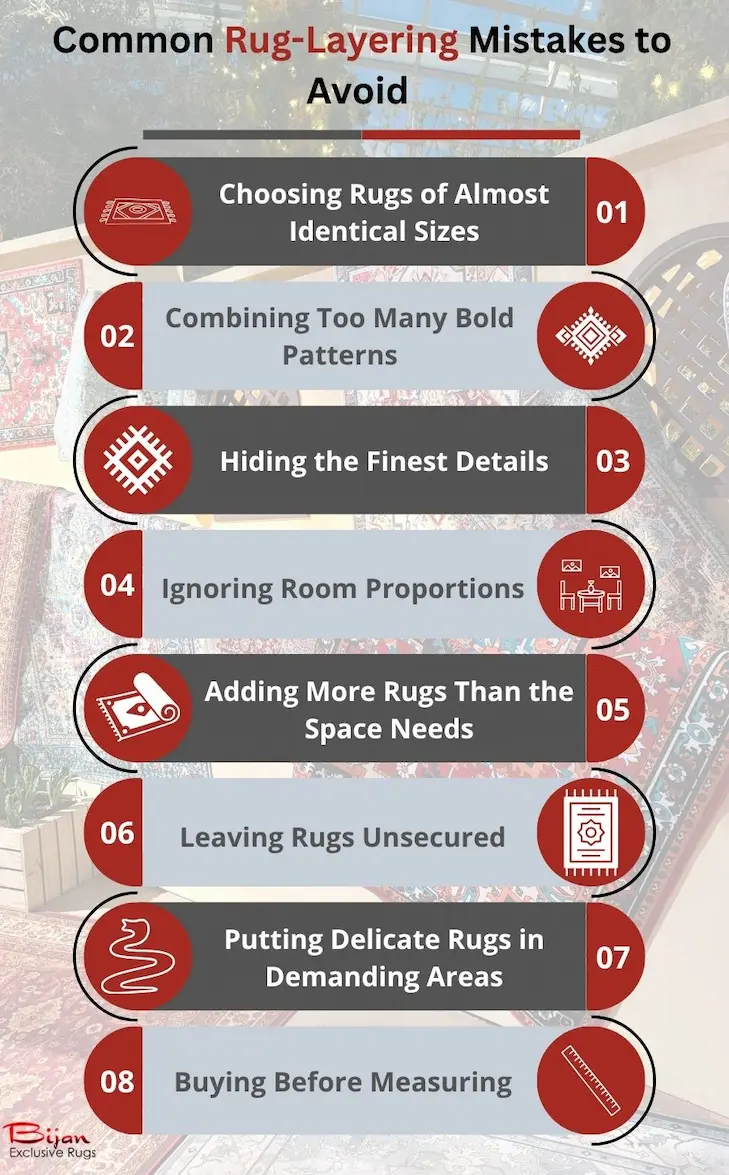
Common Rug-Layering Mistakes to Avoid
Most rug-layering errors come down to scale, placement, or practicality. Take a step back to evaluate the entire room instead of the rug individually.
Avoid these common mistakes:
- Choosing rugs of almost identical sizes: The base should remain clearly visible around the upper layered rug.
- Combining too many bold patterns: Use a shared colour to connect the designs and let one rug take the lead.
- Hiding the finest details: Avoid covering a beautiful medallion, border or motif beneath a sofa or cabinet.
- Ignoring room proportions: Small rugs may appear lost in a large lounge, while oversized pieces can crowd a compact room.
- Adding more rugs than the space needs: Not every room benefits from several layers.
- Leaving rugs unsecured: Loose corners and moving layers can create a trip hazard. Healthdirect Australia identifies rugs and floor mats as common household hazards when they are not properly secured.
- Putting delicate rugs in demanding areas: Reserve fragile silk and older handmade pieces for lower-traffic, spill-free spaces.
- Buying before measuring: Record the room, furniture and doorway dimensions first.
Test centred, offset, and diagonal setups before committing. Also shoot a couple of pictures from various angles. For layered rugs in living room settings, Bijan’s rug visualiser can help you see how a particular rug will look in the room before you layer rugs on top of one another.
Create a Layered Look That Feels Collected, Not Crowded
Learning how to layer rugs begins with a few simple steps. Measure the room, choose a suitably sized base and place a smaller feature rug above it. Connect the two through colour, pattern or texture, then secure and maintain both layers.
There is no single correct arrangement. The best result should complement the room, suit the furniture and work with the household’s daily routine.
At Bijan Exclusive Rugs, we can help compare rug sizes, colours, textures and weaving styles. Our handmade collection offers options for understated interiors, richly detailed rooms and everything in between.
Customers can also use our rug visualiser or visit our Sydney showroom for personal guidance.
Ready to start layering rugs? Explore our rug sale or contact us to find a combination that feels beautifully collected.