

Discover the eternal art of history and origin of Baluchi rugs, which represent the long-established traditions and cultural identity of nomadic tribes in the border areas of Iran and Afghanistan.
These rugs are known for their durability and distinctive design, featuring bold geometric motifs, rich natural dyes, and an old-time-tested hand-weaving technique.
This blog discusses the history and origin of Baluchi rugs, offering an overview of their characteristic colours, symbolic designs, and materials that keep them popular.
Also check our Hereke rugs history and origin guide.
History and Origin of Baluchi Rugs: Materials and Construction
Baluchi rugs are made from natural materials, making them long-lasting and distinctive for their well-known tribal features.
These materials, with the time-tested craftsmanship, reflect the history and origins of the Baluchi rug, as well as their purpose and necessity in the nomadic lifestyle.
The foundation is commonly made of cotton and provides a stable, strong structure, allowing detailed knotting and complex designs.
The pile is commonly constructed of wool, valued for its softness, strength and ability to withstand years of use.
The sheep wool used is also of high quality, which adds to the rich texture and resilience for which it is known.
Goat or camel hair is also embedded in the weft in certain works or serves as an ornament on the rugs, adding a somewhat rough texture and further identifying them as tribal.
Looms and Weaving Techniques
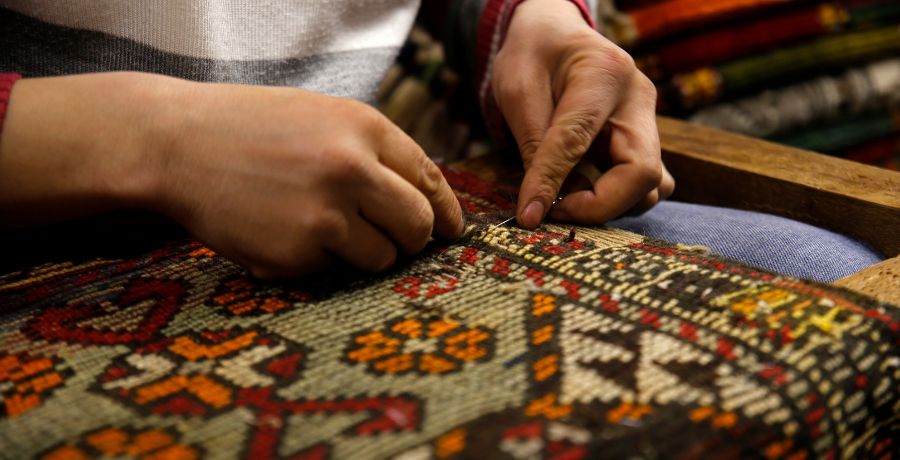
Baluchi rugs are made on horizontal looms, which is quite convenient for a nomadic life.
Weavers normally employ asymmetrical knots, achieving knot densities exceeding 100 knots per square inch.
It may take several months to make a single rug-sized area rug, and the artisans spend many hours daily.
It is a painstaking procedure that points to the art, patience, and culture of the origins of Baluchi rug weaving.
History and Origin of Baluchi Rugs: Design and Patterns
Baluchi rugs feature distinctive patterns and a visual language closely tied to the beliefs and traditions of Baluchi tribes.
These designs are based on the history and origins of Baluchi rugs and can be used for decoration, cultural identification, and artistic heritage.
Some of the most familiar motifs of the traditional Baluchi rug weaving are presented below.
Geometric Motifs
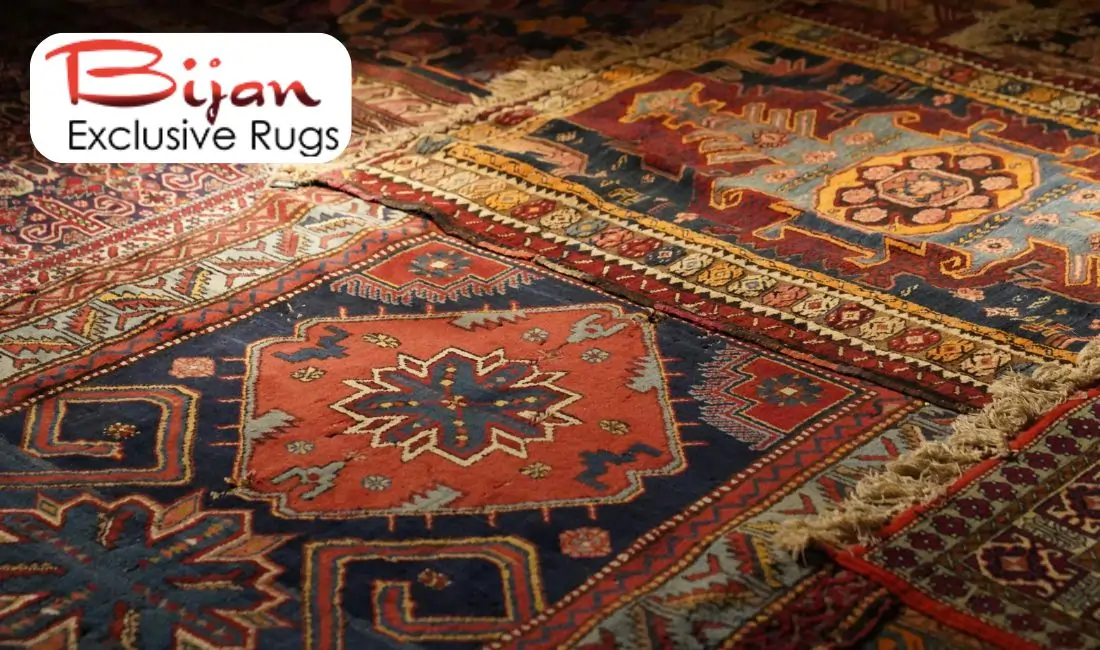
Strong geometric forms characterise Baluchi rugs. Forms (hexagons, triangles and long rectangles) are organised in harmonious, rhythmic structures.
These geometric patterns emphasise the technical proficiency of the weavers, along with the tradition of design influenced by a nomadic lifestyle, as they learned patterns and passed them to their descendants without drawing or mapping them in advance.
Camel Prints and Gul Repeat Medallions
The Baluchi people place great cultural and economic value on camels, reflected in camel-related motifs and the recurring gul medallions.
These figures are stylised rather than literal, reinforcing their symbolic meaning.
The camel prints and gul repeats can create a cultural context and link the rug directly to the origins of Baluchi tribal weaving.
Unique Design Characteristics
Another distinctive feature of Baluchi rugs is the repetition of a single motif throughout the field.
The design style gives the rug a sense of harmony and visual continuity, which conveys its tribal nature.
The repetition also evokes the old weaving traditions, when the monotony of patterns enhanced the beauty of the work and its symbolic power, further supporting the long traditions of Baluchi rug design.
History and Origin of Baluchi Rugs: Colours and Dyes
The colour palette of the Baluchi rug is based on the environment around it and the ancient traditions of the Baluchi people.
Drawing on the history and origins of Baluchi rugs, the textiles combine bold colours with natural, earthy tones to create an impressive visual effect.
Natural Dye Traditions
According to traditional Baluchi practice, rugs are coloured with natural dyes derived from plants, insects, and minerals.
This ancient dyeing technique yields warm, organic tones that mature with time.
The use of natural dyes not only deepens the colour but also shows a sustainable approach.
Our collection of vegetable dye rugs also uses natural dyes.
Common Colour Combinations
Baluchi rugs feature colour schemes dominated by deep reds, indigo blues, greys, and browns, creating rich, grounding backgrounds.
These darker tones are frequently underscored with accents of ivory, white, yellow or orange.
The frequent use of black, as an outline and a dominant colour, adds contrast and intensity, making Baluchi rugs look so special and dramatic.
Regional Variations of Baluchi Rugs
The history and origins of Baluchi rugs are related to the large area of the Baluchi population.
With the migration and settlement of Baluchi tribes across Iran and Afghanistan, distinct regional patterns of Baluchi rugs began to evolve.
Environmental, cultural, available materials, and local weaving practices determine these regional differences.
Iranian Baluchi Rugs
The Iranian Baluchi rugs are mainly hand-woven in eastern Iran, which borders Afghanistan and Pakistan.
These carpets are characterised by high workmanship, thick knotwork, and harmonious geometric designs.
The colour palette is dominated by deep reds, dark blues, and dark browns, ivory, usually implemented using natural dyes.
In terms of design, Iranian Baluchi rugs often feature repetitive patterns, including diamonds, octagons, and floral motifs.
These designs are based on the tribal symbolism and the long history of Baluchi rug weaving in the area.
Small-scale carpet formats in the form of prayer rugs are particularly popular, emphasising their cultural and religious significance in Baluchi life.
Afghan Baluchi Rugs
Afghan Baluchi rugs tend to be more daring and rustic in appearance.
These rugs are mainly woven in western Afghanistan and mostly feature dark colouring, in deep maroons, dark browns and black accents.
Afghan Baluchi rugs are usually made of a richer wool, which makes the texture softer and the feel more robust.
The patterns in Afghan Baluchi rugs tend to be more spacious and simpler than those in Iranian rugs.
There is often a strong influence of nomadism, with large geometric forms, repeated medallions, and minimal borders.
Those design decisions reveal the practical origins of Baluchi rugs, which were originally designed as tools of daily use rather than as representative art.
Also check our Afghan rugs.
Differences in Patterns, Colours, and Weaving Styles
Although the Iranian and Afghan Baluchi rugs have a common tribal origin, there are distinct differences in patterns, colours, and weaving processes.
The Iranian Baluchi are commonly more detailed and feature more complicated patterns, whereas the Afghan Baluchi are more geometric and heavier.
The regional sources of dyes are also reflected in the variation of colour, with Iranian rugs showing greater tonal variation and Afghan rugs darker, more uniform colours.
Collectively, these local differences demonstrate that the origins of Baluchi rugs have been shaped by geography and tradition, ensuring that every piece of the artwork is a unique manifestation of Baluchi cultural identity and history.
History and Origin of Baluchi Rugs: Climate and Environmental Influence
The physical landscape and weather conditions of the Baluchistan region have had a direct influence on the history and origins of Baluchi rugs. The environment in which the Baluchi tribes live has shaped both the materials they use and the practical qualities of their rug designs.
Influence of a Harsh Climate
Baluchistan has a dry or semi-arid climate, with extreme temperatures, including hot summers and cold winters.
This is a challenging place that has promoted a nomadic lifestyle, emphasising durability and functionality.
Consequently, the Baluchi carpet is renowned for its toughness and durability, reflecting the resilience and adaptability of the Baluchi people.
Use of Natural, Local Materials
Conventional Baluchi rugs are crafted from materials readily available in the area, such as wool, cotton, and locally procured goat or camel hair.
Such natural fibres would not only be compatible with the climatic conditions but would also reinforce the practice, which is rooted in the origins of Baluchi rug weaving.
The dependence on the local sources exemplifies the strong relationship between Baluchi rugs, their landscape, and the cultural background of their production.
How to Identify Authentic Baluchi Rugs
It is important to understand the history and origins of Baluchi rugs to identify authentic ones.
True Baluchi rugs represent centuries of tribal weaving traditions, unique natural materials and symbols of culture.
By listening to the construction, stylistic features, and other important features, collectors can distinguish original Baluchi carpets from reproductions or falsely attributed carpets.
Key Characteristics and Design Features
Authentic Baluchi rugs are traditionally handwoven from the most common local sheep’s wool, which gives them a soft, durable texture.
The pile is typically short and medium, slightly coarse, which depicts the conventional nomadic weaving styles.
The colour schemes are usually deep and earthy (dark reds, indigo blues, browns, and blacks), thanks to the natural dyes, and each rug offers a rich, organic look.
Another good indicator of authenticity is the rugs’ design patterns.
Baluchi carpets are famous for their geometric patterns, the tribe’s repetitive symbols, and elements significant to the culture.
Search in diamonds, octagons, stylised trees, and layouts of prayer rugs.
Minor anomalies or asymmetries are accepted, provided they are evidence of handwoven manufacture rather than machine manufacturing.
Antique, Vintage, and Modern Baluchi Rugs
To identify Baluchi rugs, it is crucial to determine the rug’s age.
Antique rugs are typically older than 100 years; they may show natural wear, dull colours, and amazing handwork in line with the original traditions of Baluchi weaving.
Vintage rugs are 30-80 years old and retain traditional patterns, albeit with somewhat brighter or even more uniform colouring due to changing dye processes.
Modern Baluchi rugs, which are based on traditional designs, often use synthetic colour pigments and machine-spun wool, resulting in more cohesive colour effects and crisp contrasts.
Common Misattributions
Baluchi rugs can be misidentified as neighbouring weaving cultures, such as the Turkish rugs of the Turkmen or Persian rugs, which also have similar patterns and colouring.
Even some of the rugs sold as Baluchi may be reproductions made in workshops that lack the tribal character and cultural richness of a true handwoven piece.
Be sure to recognise a true Baluchi rug by being conversant with the weaving techniques, materials, and design features.
Knowledge of the history and origins of Baluchi rugs contributes to their authenticity and further enhances appreciation of their cultural and artistic value.
Tips for Buying and Caring for Baluchi Rugs
It is not only a decorative decision when you add a Baluchi rug to your place or collection, but also an investment.
To make a wise purchase and ensure your rug will not wear out after a few decades, follow these tips.
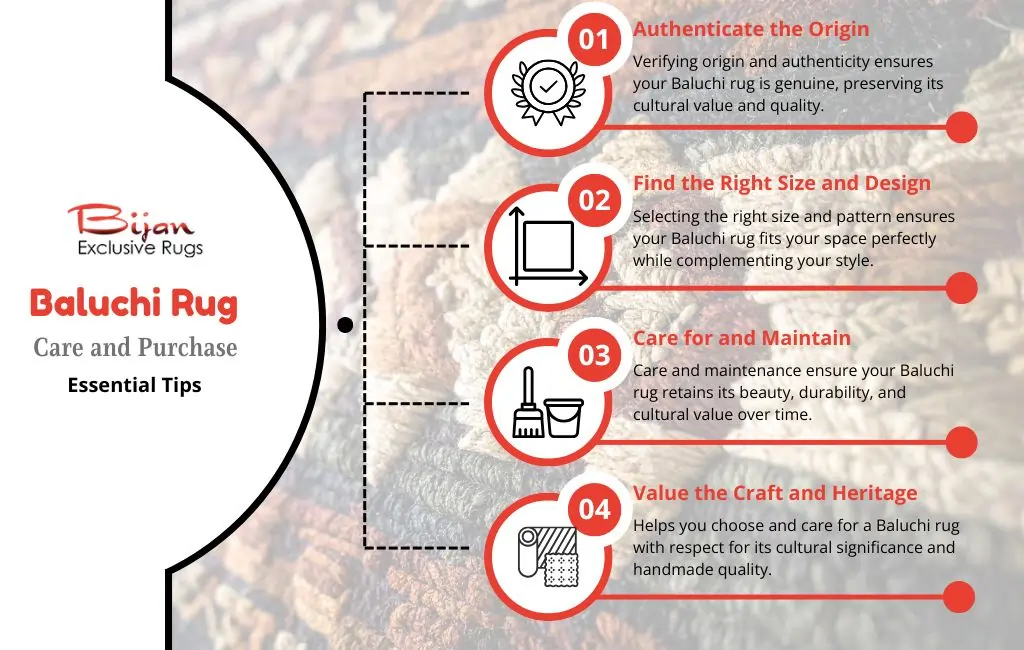
Verify Origin and Authenticity
When buying a Baluchi rug, ensure that it is authentic and of provenance.
Work with reputable dealers who can provide details on the rug’s history, materials, and craftsmanship.
Learning the main peculiarities and classic patterns of Baluchi carpets will help you distinguish authentic tribal artifacts from fakes.
Need help with identifying authentic rugs? Check our guide ’Is That Persian Rug Authentic?’ Guide.
Select the Right Size and Pattern
Baluchi rugs are usually smaller because of their tribal background, so you should ensure the rug’s size matches the space they wish to furnish.
Look at the form, colour scheme, and design to ensure the rug matches your interior.
Care and Maintenance
To keep your rug beautiful and durable, it is essential to maintain it properly.
- Vacuum it carefully to remove dust, and periodically turn it to prevent wear in one spot.
- Do not put heavy furniture directly on the carpet.
- Deep cleaning should be done professionally every few years.
- Avoid exposing your Baluchi rug to direct sunlight to prevent fading and loss of its natural dyes.
Appreciate the Craftsmanship and Heritage
A Baluchi rug is not only a decorative object, but also a physical embodiment of the history and heritage of Baluchi rugs.
Every pattern, motif and colour selection is reminiscent of centuries of tribal art and culture.
Knowledge of this tradition enables you to appreciate the talent, culture, and narrative woven into every rug.
History and Origin of Baluchi Rugs: Supporting Baluchi Artisans
Buying and cherishing Baluchi rugs isn’t only one of the ways to make your home or collection look better, but also a way to save a centuries-old art form and help the communities that keep it alive.
The following are some of the ways that can make a difference:
Buy from Trustworthy Sources
Always buy Baluchi rugs from reputable dealers or directly from skilled artisans who follow fair trade practices.
This way, the weavers are well compensated, and they maintain their traditional craftsmanship.
Raise Awareness
Share your knowledge of Baluchi carpets and their cultural significance with others, helping them appreciate this national textile tradition.
Training your friends, family, and community will help create curiosity and admiration for these handwoven wonders.
Preserve Cultural Traditions
Promoting Baluchi artisans directly supports the preservation of traditional weaving styles and culture.
By appreciating their work, you help ensure that the craft and the stories behind it can be enjoyed and admired by future generations.
Baluchi Rugs: A Celebration of Tradition and Craftsmanship
Baluchi rugs are exquisite embodiments of cultural values and artistic masterpieces of the Baluchi tribes.
By understanding the history and origins of Baluchi rugs, along with their distinctive features and weaving methods, you will be able to appreciate their beauty and timeless appeal even more.
Supporting Baluchi artisans and telling the stories of these rugs helps preserve this ancient art and keeps the lives of skilled weavers alive.
At Bijan Exclusive Rugs, we are very proud to offer a curated rug collection of Baluchi rugs and other fine Oriental and Persian rugs in Sydney.
Our gallery displays the best pieces of tribal art and crafts.
Explore our full range of Persian and Oriental rugs today at Bijan Exclusive Rugs.
Shop Our Baluchi & Oriental Rug Collection Now