

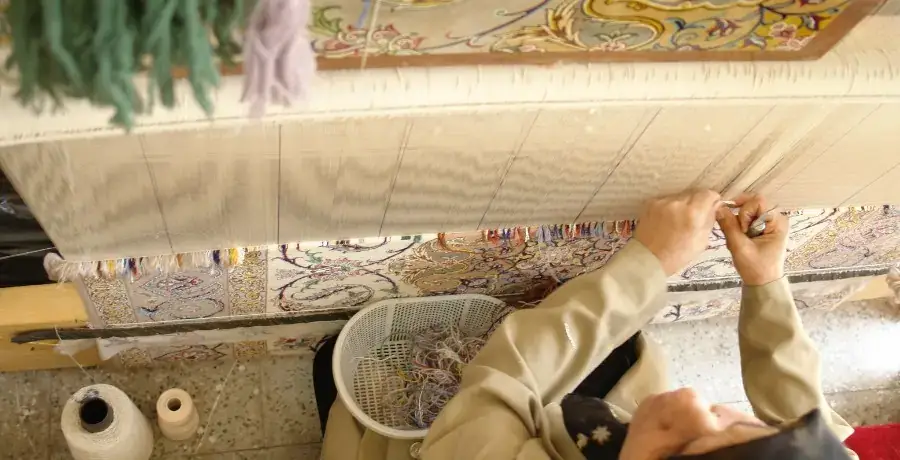
As a specialist of Persian rugs in Sydney, one of the first questions I often hear is, “How long does it take to make a Persian rug?”
The honest answer is that a handmade Persian rug can take several months to several years to complete.
It all depends on the rug’s size, knot density, materials, design complexity, and whether it is made by one weaver or a team of skilled artisans.
A small wool rug may take a few months. A larger, finely knotted piece can take years, especially if it includes silk, detailed floral work, medallions, or traditional city designs. That time is part of what gives the rug its beauty, depth, and lasting value.
I find that once people understand the time and craftsmanship that go into authentic Persian rugs, the price, rarity, and character of each rug make much more sense.
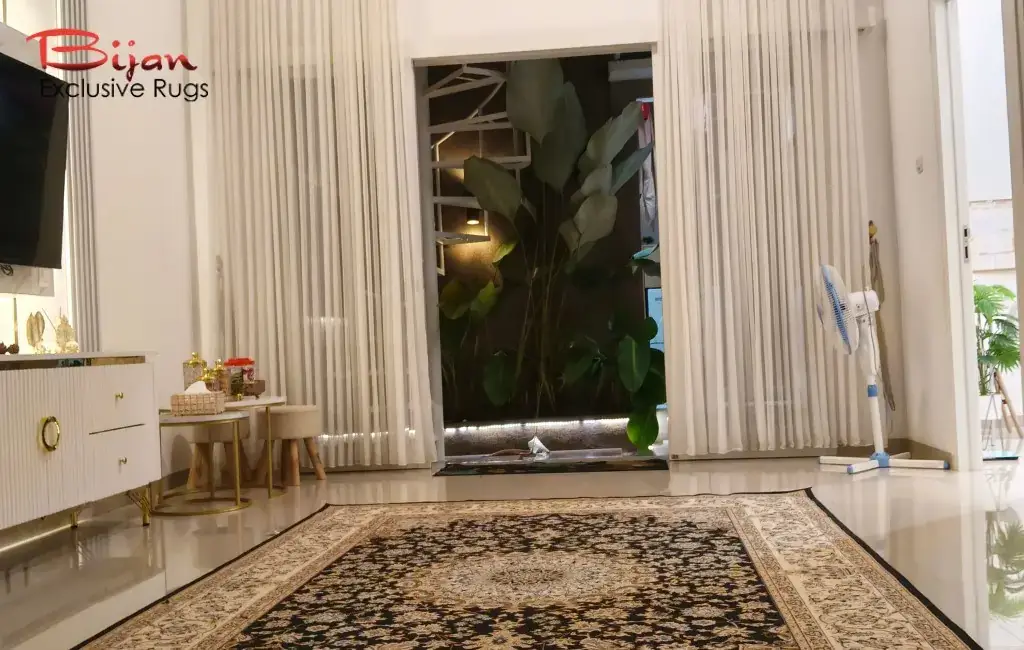
The Quick Answer: How Long Does It Take to Make a Persian Rug?
So, how long does it take to make a Persian rug?
This will depend on the rug. It can take a few months for a small handmade Persian rug to be finished, and up to 2 years for a medium-sized rug. The process may take several years for a large, finely knotted rug.
That’s because Persian rugs are handmade and not printed or rushed through a machine. According to UNESCO, traditional Kashan carpet weaving uses wool or silk yarns, which are knotted to the warp and then hand-set and beaten into the carpet. This alone is a clue to you how long it takes to make a handmade Persian rug!
Generally, silk pieces, intricate city rugs, and collector masterpieces require more time, as the patterns are more complex and the handling of the materials is more delicate.
The renowned Ardabil Carpet, with its dense knotting and detailed design, would have taken skilled weavers several years to complete.
Why Persian Rugs Take So Long to Make
A handmade Persian rug is built knot by knot, row by row. It is slow work, and that is exactly why the finished piece has so much character.
Here is the simple breakdown:
- More knots = more time: Every hand-tied knot adds detail, strength, and pattern definition.
- Detailed designs need sharper focus: These floral designs, centre medallions, garden designs, and borders are not fast to weave. The weaver must maintain the pattern over thousands – and in some cases, millions – of knots. Errors in any single section can ruin the entire design.
- Materials can slow the process down: How long it takes to make a handmade Persian rug is influenced by factors such as the type of wool or silk used and the dyes employed.
How long does it take to weave a Persian rug? It’s not only the hours spent sitting at the loom; it can also involve preparing the fibres, dyeing the yarn, setting the loom, tying each knot, cutting back the pile, washing, drying, and finishing.
Average Persian Rug-Making Time by Size
When buyers ask me how long it takes to make a Persian rug, I tell them that size is one of the first things I look at. The rug’s size just gives the weaver more space to work. The more surface area, the more knots, more wool or silk, and more time sitting at the loom.
Here is an easy way to explain it:
| Rug Type | Common Use in Australian Homes | Estimated Making Time |
|---|---|---|
| Small accent rug | Entryway, reading nook, bedside | 2–6 months |
| Runner rug | Hallways, narrow spaces, stair areas | 4–12 months |
| Medium rug | Living room, dining room, bedroom | 6–24 months |
| Oversized rug | Open-plan living, large formal rooms | 1–3+ years |
| Fine silk or masterpiece rug | Collector display, formal interiors | 2+ years |
These are general guidelines and not absolute rules. I have seen some smaller pieces taking longer than expected because the knotting was incredibly fine. It’s also been my experience that smaller rugs are completed more quickly when the pattern is lighter and the knot count is lower.
That is why how long a Persian rug takes to make is never simply a matter of measurements.
According to Britannica, the type of knot can affect the fineness and tightness of the pile, and compares hand-knotting to the way small components are incorporated into a mosaic.
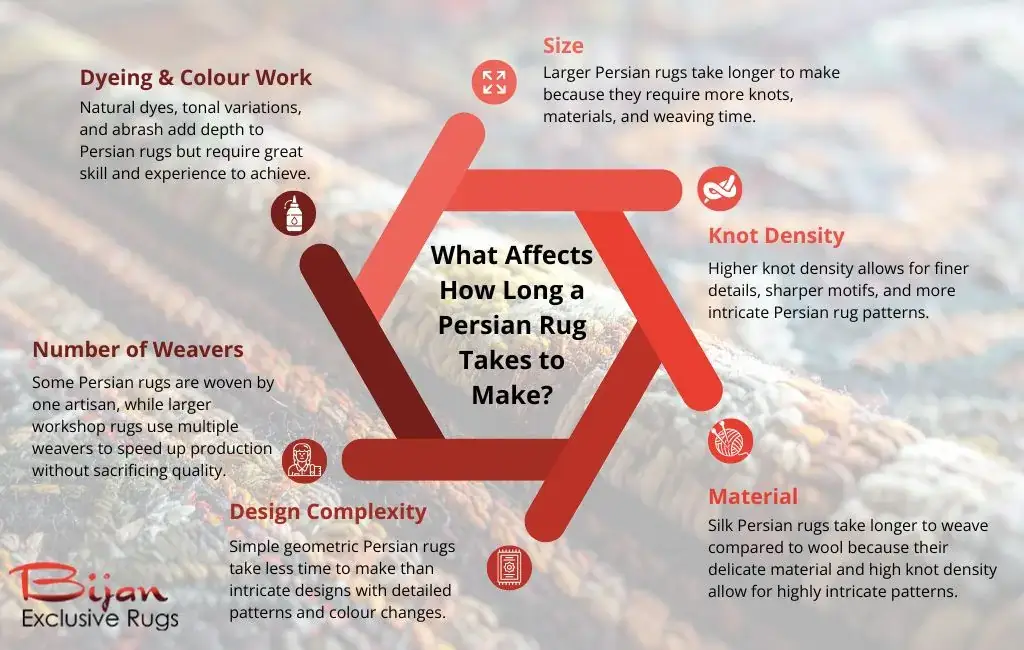
What Affects How Long a Persian Rug Takes to Make?
The time depends on the rug. There’s no single answer. It can take months for a small, simple wool rug, while a large, finely woven piece can take years.
Size
The most obvious factor is size. The bigger the rug, the more knots you will need, and the more material and loom time you will require. A hallway runner will probably be completed a lot more quickly than an oversized living room rug. That is why the time it takes to make a Persian rug can change so much from one piece to another.
Knot Density
Knot density is also a significant factor. The greater the density of knots, the finer the curves, the sharper the motifs, and the more detailed the patterns.
Material
Persian rugs are usually made with wool, but silk is finer and more delicate. Weaving silk rugs can take longer, particularly if the design is intricate. Some silk Kashan carpets are extremely high knot density (according to the Metropolitan Museum of Art), and rows of tiny, hand-tied silk knots form the patterns.
Design Complexity
A plain geometric rug might require less time to manufacture than a more elaborate floral, medallion, hunting, or city theme rug. The more detailed the pattern, the more attention the weaver must pay to each line, curve, and colour change.
Number of Weavers
A single weaver weaves some rugs. Others, particularly large workshop pieces, can require multiple weavers working simultaneously. This can decrease overall production time, but also demands skill and consistency. As for the number of weavers who could have worked at Ardabil Carpet, the V&A states that up to 10 may have worked there.
Dyeing and Colour Work
The rug colour process is important too. Natural dyes, tonal variations, and ‘abrash’ in rugs can bring a lovely depth and richness – but they require skill and experience.
The Persian Rug Making Timeline: Step by Step
Weaving the rug is just one aspect. A handmade rug has a full journey before it ever reaches a home, and each stage adds time, skill, and character.
Here is the process I usually walk buyers:
| Stage | What Happens | Why It Adds Time |
|---|---|---|
| 1) Design Planning | The pattern is planned before weaving begins. | The more detailed the design, the slower and more careful the planning needs to be. |
| 2) Wool or Silk Preparation | The fibres are prepared before they can be woven. Wool, cotton, and silk are all used in rug construction, depending on the rug type. | Better materials need careful handling before they reach the loom. |
| 3) Dyeing the Yarn | The yarn is dyed into the colours needed for the design. Natural dyes can create subtle variation and depth. | Colour preparation affects the final look, especially in rugs with many tones. |
| 4) Preparing the Loom | The warp threads are set vertically, while the weft threads run horizontally. These form the rug’s foundation. | A poorly prepared loom can affect the shape and structure of the rug. |
| 5) Hand-knotting | Coloured pile yarns are knotted by hand around the warp threads, row by row. | This is usually the longest stage, especially for finely knotted pieces. |
| 6) Trimming and shearing | Once woven, the pile is cut and levelled. | This helps reveal the pattern clearly. |
| 7) Washing | The rug is washed after weaving. | Washing helps settle the fibres and soften the finish. |
| 8) Drying and stretching | The rug is dried and shaped. | This helps the piece sit properly. |
| 9) Final Inspection | The rug is checked for finish, shape, pattern, and overall quality. | Small finishing details can make a big difference. |
Do Persian Rugs Take Longer Than Other Handmade Rugs?
Persian rugs don’t necessarily take longer than other handmade rugs. A fine Afghan rug, Turkish rug, Pakistani rug, or Indian rug can also take months or even years to complete, especially if it is hand-knotted, large, made from delicate materials, or filled with detailed pattern work.
So, how long does it take to make a Persian rug compared with other rugs?
The better question to ask is: how large is it, how fine is the knotting, what material is used, and how complex is the design?
How long it takes to make a handmade Persian rug is not in relation to the country name but rather in relation to the artistry of the rug.
Check here for a detailed guide on the difference between Persian rugs vs other oriental rugs.
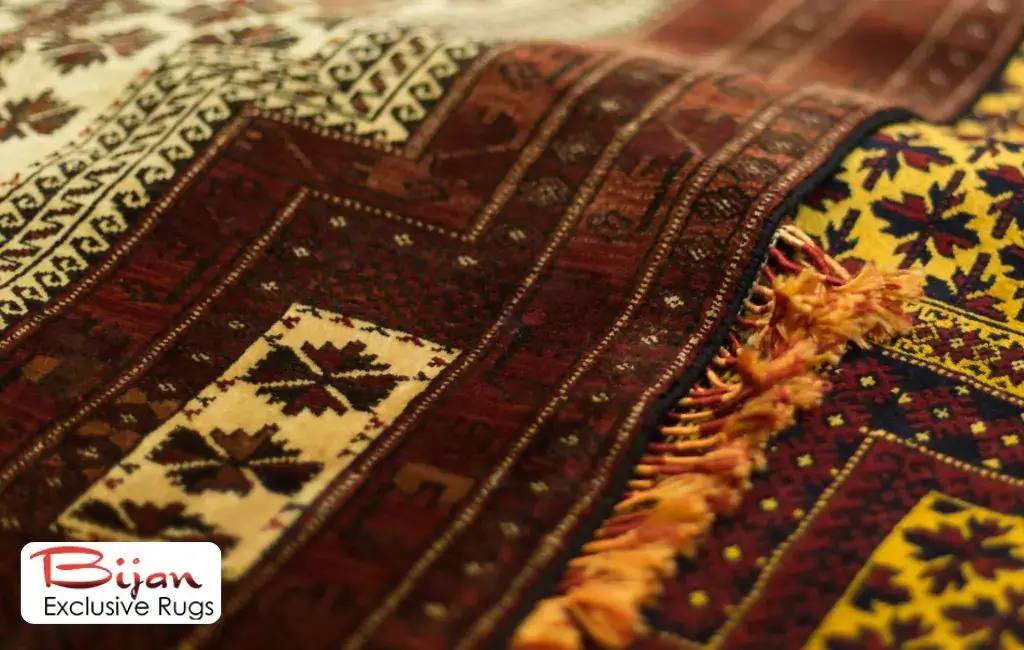
How to Tell If the Time and Craftsmanship Are Worth It
When I’m asked by a potential buyer how long it takes to make a Persian rug, I’m typically met with another question: Does the rug show the work?
Time is important, but not if the craftsmanship, materials and condition are not.
Here is what I look for when assessing whether a rug is worth the labour behind it:
| What to Check | Why It Matters |
|---|---|
| Hand-knotted Back | Turn the rug over. The back should show the structure of the design and not a printed or glued backing. |
| Natural Variation | Slight shifts in colour, pattern, or line can be part of the handmade character. Too-perfect uniformity can feel flat. |
| Fine Detailing | The more knots there are, the more accurate the motif will be. The high knot count and dense warps may enable more complex and precise design work. |
| Quality Wool or Silk | Good materials will have an impact on texture, sheen, durability, and will look great as the rug gets older. |
| Even Edges and Finishing | The rug should sit well, with careful binding, balanced shape, and no major distortion. |
| Clear Information | Enquire about the origin, age, material, and condition of the rugs, as well as their repair history, before purchasing authentic Persian rugs. |
How long it takes to make a handmade Persian rug is just a part of the story. Years of weaving a rug don’t mean you can just neglect it.
According to the Smithsonian’s Museum Conservation Institute, examination, documentation, treatment, and preventive care are all forms of textile conservation that can be applied to carpets and other textile objects.
Final Answer: So, How Long Does It Really Take?
So, how long does it take to make a Persian rug? In most cases, a handmade Persian rug can take anywhere from a few months to several years.
As a Persian rug specialist, I always remind buyers that this slow process is part of the charm. A genuine Persian rug is not rushed. It is built carefully, one knot at a time, with skill you can see in the pattern, feel in the texture, and appreciate in the colour and finish.
The good news is that you do not always need to wait years for one to be made. At Bijan Exclusive Rugs, we offer an entire collection of Persian rugs and curated rug collections, each suited to different room sizes, interior styles, and Australian homes.
Contact us or explore our Persian rug collection and find a handmade piece that feels perfect for your space.