


If you have ever looked at the price tag and wondered, “Why are Persian rugs so expensive?” The simple answer is this: they are not ordinary floor coverings.
An authentic Persian rug is usually a handmade piece, built slowly with skill, patience, and tradition. Depending on the size, material, knot density, design complexity, and weaving region, one rug can take months or even years to complete.
We hear this question often. And honestly, it is a fair question. If two rugs both sit on the floor, why are rugs so expensive when one happens to be Persian?
That is exactly what this guide will explain.
I will walk you through why Persian rugs are expensive, what factors affect their price, and how to tell whether a rug is genuinely worth the investment.
By the end, you will have a clearer idea of what you are paying for and why the right Persian rug can hold value far beyond its beauty.
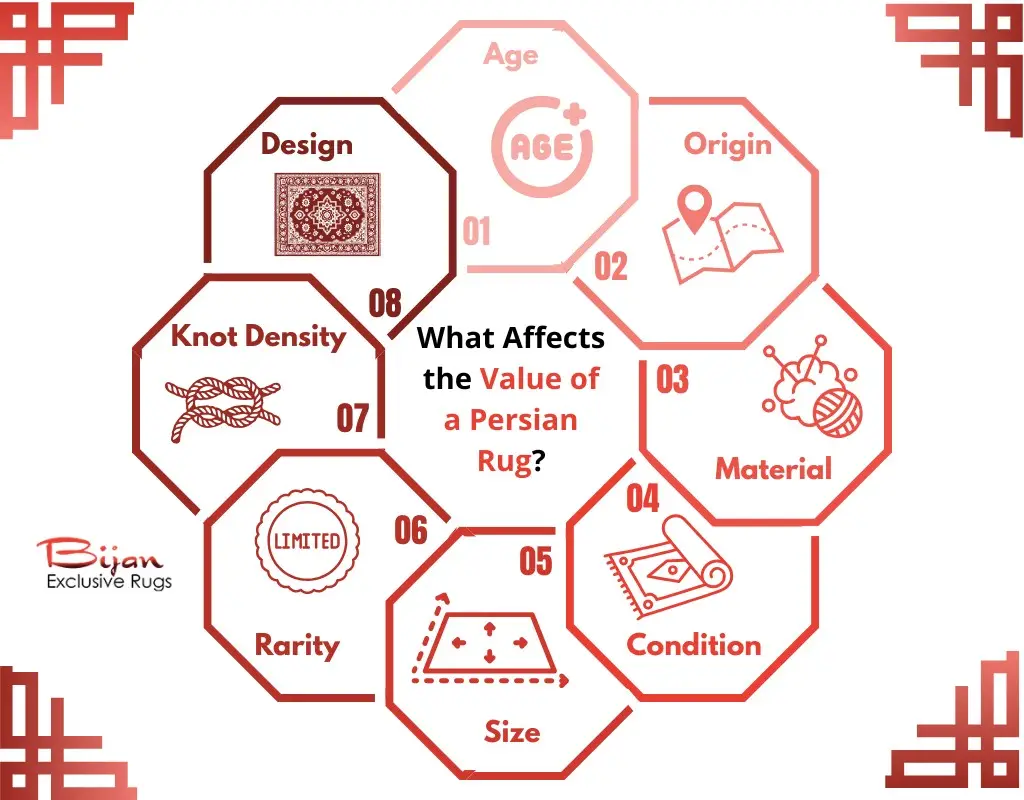
Handmade Craftsmanship Is the Biggest Reason Persian Rugs Cost More
People often ask me why Persian rugs are so expensive. This is usually my answer.
A genuine Persian rug is not pumped out by a machine.
Handcrafted and handmade, it is constructed slowly, knot by knot.
That matters.
In traditional Persian carpet weaving, the foundation is made of wool or silk yarn, which is hand-knotted.
That’s the difference between purchasing a rug and purchasing hundreds of hours of skilled work.
Handmade vs Machine-Made: The Simple Difference
A machine-made rug can be produced quickly. The design is repeated. The procedure is more rapid. The outcome may still be good, but not as human.
A handmade Persian rug is different.
The weaver has to manage:
- the knotting
- the pattern
- the tension
- the rug colours
- the borders
- the symmetry
- the finishing
One mistake can affect the whole piece.
This is the one reason why Persian rugs are more expensive compared to conventional decorative rugs. You’re not paying for it to cover the ground. You’re paying for time, patience, training, and judgment.
A Persian rug is closer to a work of art than a mass-produced home accessory.
The more detail that’s provided, the longer it takes. A large rug, a pattern, or a piece of silk can take months to make. A rug can take months to produce, which shows why labour plays a large role in its price.
That’s also why the best are considered collectibles. The Clark Sickle-Leaf Carpet was the most expensive Persian rug sold at auction at Sotheby’s, reaching US$33.7 million.
So, are Persian rugs expensive? Yes.
When you know what to expect from an authentic Persian rug, the price makes more sense. The best masterpieces are not costly by chance. They carry handcraft, skill, and history that machines can not replicate.

The Materials Used Can Make a Huge Difference
Why are Persian rugs so expensive?
Look beyond the pattern first. Look at what the rug is made from.
The material sets the price before the weaving even begins. If the raw materials are of better quality, more difficult to prepare, and to work with, a Persian rug with strong wool, fine silk, a cotton foundation, or natural dyes will typically be more costly.
Wool is Popular for a Reason
One of the most significant factors why Persian rugs feel soft but durable in bustling households is the quality of the wool.
Always consider the wool first. Good wool has body. It feels warm, springy, and naturally resilient. Sheep wool is one of the primary raw materials used in Persian carpets, and its quality may vary across different climates, pastures, and sheep-rearing areas.
This is why Persian rugs are more expensive than many standard rugs. The higher the quality of the wool, the more it will cost.
Silk Takes the Price Higher
Silk is where the price can really climb.
The fine detail, sharp patterns, and luminous finish that silk can produce are beyond the ability of wool. That is why silk rugs can be classified as a higher-priced category.
They are more delicate, more refined, and usually more labour-intensive. Historic Islamic carpets became so precious that many were used on furniture or walls rather than placed on the floor.
They are finer in texture, more refined, and typically more labour-intensive. That tells you a lot about how valuable fine materials can be.
Natural Dyes Add Depth
Then we have colour.
Natural-dyed rugs, like vegetable-dyed rugs, tend to age with greater variation, more colour, and a more natural appearance. Dyeing of wool and silk has been a characteristic of Persia for centuries.
So, are Persian rugs expensive? Yes. However, if all the wool, silk, foundation, and dyes are of excellent quality, the price becomes more reasonable.
Origin and Weaving Region Affect the Price
Another significant reason why Persian rugs are so expensive is where they are made.
In the rug world, origin matters. A lot.
Two Persian rugs may be the same size but sold at vastly different prices because they were made in different weaving areas.
Fine and detailed work is the hallmark of some localities. Others are cherished for their outlandish designs, rustic quaintness, or uniqueness in older collections.
According to Encyclopaedia Iranica, the main centres of carpet production were: Kashan, Kerman, Tabriz, Qom, Arak, Isfahan, Nain, Bijar, Yazd, Khorasan, Fars, Baluchistan, and Gorgan, each with very peculiar designs, production techniques, and commerce.
City rugs are usually more refined. The city’s reputation is a major factor in the rug’s price.
Kashan is a good example. Kashan carpet weaving is a particularly delicate art, and the colours used in making them are natural dyes such as madder root, walnut skin, pomegranate skin, and vine leaves. At the same time, the backs are finely and evenly knotted.
Style Also Matters
Persian rug styles vary a lot. Some are formal and floral. Some are geometric. Others are softer and more subtle. Some are lavish, elaborate, and almost palace-like.
The more complex and sought-after the design, the more it can influence rug value.
So, are Persian rugs expensive? Often, yes. Once you get to know the origin, region, and style, the price seems more predictable.
Knot Density and Design Detail Increase the Labour Cost
Another contributing factor to why Persian rugs are so expensive is the level of detail in their weaving.
I always advise customers to flip the rug over and take a look at its back. That’s where the work begins to show.
What Does Knot Density Mean?
Knot density simply means how many knots are packed into a certain area of the rug.
A great example of this is the famous Ardabil Carpet. Its wool pile is extremely dense (around 5,300 knots per ten square centimetres), allowing the designer to incorporate a great deal of detail. The museum also reports that such a large carpet would have required a skilled team several years to weave.
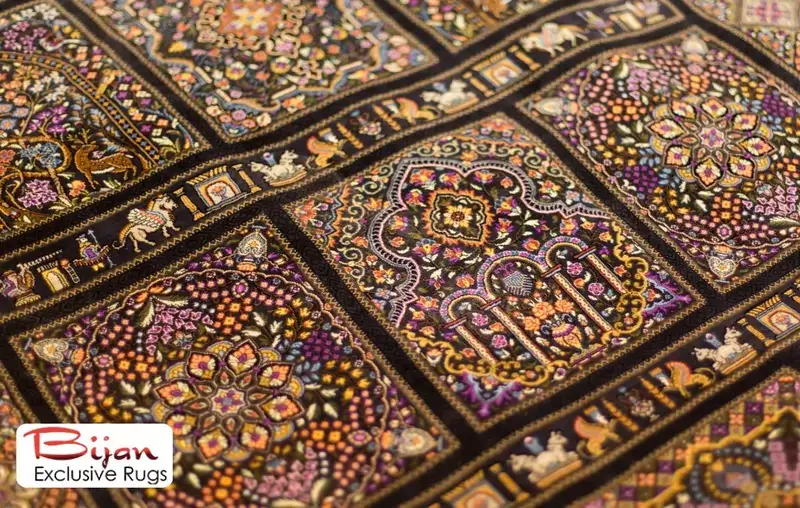
Medallions, flowers, multiple borders, vines, corners, and harmonious colour usage are not just random decorations. Every extra layer means more planning and more weaving time.
This is why a Persian rug is often the most prominent focal point in the living room, dining room, study, or entryway of an Australian home.
Age, Rarity and Condition Can Push the Price Higher
Age can matter.
But old does not always mean valuable.
Why Some Older Rugs Cost More
Some antique and vintage rugs are costly because they are hard to replace. They could be from a well-known weaving area, may feature a very special pattern, may use beautiful natural dyes, or may exhibit a level of handwork no longer seen.
While age helps, it isn’t everything, Sotheby’s says. Value may be influenced by the quality of materials, the weaving, condition, design and collectability. It also reports that as long as carpets exhibit good design, colour, and historical character, even small pieces of old carpet are worth collecting.
Condition Can Change Everything
This is where buyers need to slow down.
A rug can be old and beautiful, but still lose value if it has serious damage.
Things I always check include:
- worn edges
- damaged fringes
- holes
- stains
- colour fading
- weak foundation
- poor repairs
- moth or insect damage
Larger and Unusual Sizes Cost More
Another simple answer to why Persian rugs are so expensive?
Size.
The bigger the Persian rug size, the more it needs.
Open-plan kitchen, dining, and living areas remain a key feature of Australian house design, particularly in modern family homes. A small rug can look lost in those areas, so many buyers opt for oversized rugs to provide proper anchoring.
Check our rug size guides: Dining Room Rug Size and Rug Size for Queen Bed,
Long and Unusual Shapes
It is not just large lounge room rugs.
Runner rugs are sometimes priced higher than expected because long, narrow handmade pieces still require careful proportioning, pattern planning, and finishing.
Then you have some shapes you don’t normally come across, such as a square rug. These aren’t always as readily available as the standard rectangular rugs.
Persian Rugs Often Cost More Than Other Handmade Rugs
Persian rugs vs. other rugs, which is more expensive?
Afghan rugs, Turkish rugs, Pakistani rugs, and even Indian rugs can be beautifully made. They are all handwoven, full of character, and valuable in their own right.
However, Persian rugs have a centuries-old legacy.
Other handmade rugs can still be excellent. However, Persian rugs command a premium price due to a variety of factors, including origin, history, design complexity, age, and collector interest.
At the end of the day, although Persian rugs tend to be more expensive, they should still be evaluated on an individual basis.
Import Costs and Limited Availability Matter in Australia
Another practical reason why Persian rugs are so expensive in Australia is simple.
We are far from where they are made.
A Persian rug isn’t simply going to be in a Sydney, Melbourne, Brisbane, or Perth showroom out of nowhere. It must be sourced, inspected, boxed, transported, covered, insured, cleared, and stored accordingly.
That all adds cost before the rug even reaches the floor.
Imported goods valued over AUD1,000 generally require an Import Declaration, with duties, taxes, and charges payable at the border. It also notes that GST is payable on imported goods unless an exemption applies.
Currency also plays a part. The cost of imported goods is always quoted in Australian dollars, and exchange rates may fluctuate, affecting the landed cost.
Buyers in Australia don’t have direct access to Persian rug markets that buyers closer to the source have. A good seller will take the time to seek out authentic rugs, inspect their quality and condition, and select rugs that suit Australian homes.
It helps reduce the risk of buyers paying premium prices for the wrong rug.
How to Tell If a Persian Rug Is Worth the Price
Never decide on the rug based on the front alone. You’ll see a lovely design, but the details tell the tale. While a rug can be old, if it has severe damage, its value can drop.
I also recommend that you consider your room when buying one. Natural light, furniture sizes, colours, and existing colours all affect how the rug feels once it is in the home.
This is where a rug visualiser can aid. It will allow you to visualise the rug without committing, especially when considering between traditional Persian rug designs versus modern rugs.
Also, ask the seller questions. Are they able to describe where it came from, the age, the material, and the condition of the rug clearly?
Product descriptions and origin claims should be accurate and supported by reasonable grounds.
Finally, remember that there is no need to go for the most expensive Persian rug. You need the right rug, with the right story, in the right condition, for the right space.
Conclusion: Persian Rugs Are Expensive Because They Carry Time, Skill and History
So, why are Persian rugs so expensive?
Because the price is not just for a rug.
It reflects the hand-knotting, the wool or silk, the dye work, the weaving region, the design detail, the age, the rarity, and the years of knowledge that went into the piece.
I always tell buyers that the goal is not to find the most expensive Persian rug. The goal is to find the right rug for your space, your lifestyle, and your budget.
Some homes need a bold Persian centrepiece. Others suit softer oriental rugs, vintage pieces, hallway runners, or more understated designs. The right choice should feel beautiful in the room, work with your furniture, and make sense for how you live every day.
Explore our collection of rugs whether it’s Persian or other oriental rugs, compare the details carefully, and choose a piece that feels right for your home now and for years to come. Contact us!