

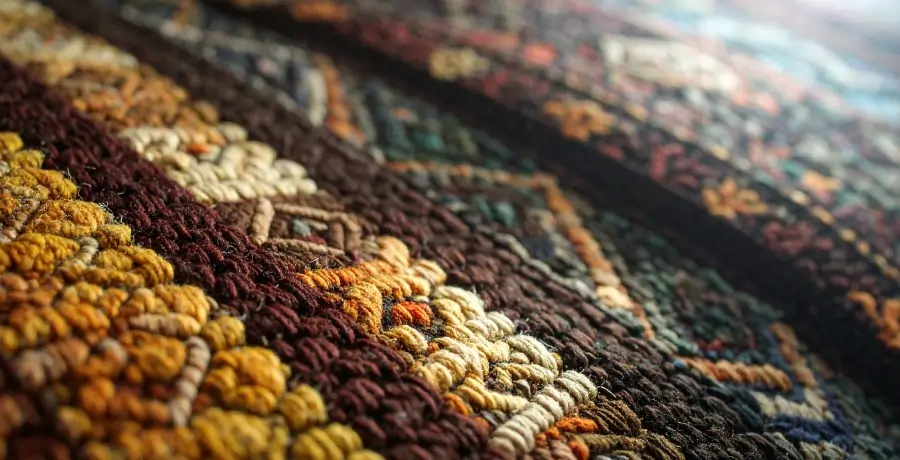
How much does a Persian rug cost?
Actually, it depends.
Persian rug prices range from a few hundred dollars to tens of thousands, especially here in Australia, where authentic, hand-knotted pieces are carefully sourced and imported.
You’ve probably seen a wide range of price points. That’s because factors like materials, knot density, size, age, and origin all play a role in the final cost of Persian rug pieces.
Even something as subtle as natural dyes or regional design can affect the overall cost of a Persian carpet.
So rather than giving you a single number, this guide will walk you through what actually determines pricing, so you can understand not just how much Persian rugs cost, but why.
If you’re curious to see how these differences look in real pieces, you can always explore our rug collections to get a feel for styles, craftsmanship, and price ranges before diving deeper.
Let’s break it all down.

What Is a Persian Rug?
A Persian rug is a hand-woven textile produced in Iran (then called Persia), made in the same way it has been made since ancient times.
A real Persian rug is not mass-produced, unlike floor coverings. Every design is a representation of the culture, region, and history of the people who make it, from detailed floral motifs to geometric tribal designs.
This is just one of the reasons Persian rugs are so expensive, particularly compared to machine-made rugs.
How much does a Persian rug cost?
Entry-level rugs can start at a few hundred dollars, whereas high-quality or antique rugs can reach AUD $5,000 to AUD 30,000+, depending on size, material, and knot density.
Persian Rugs vs Other Oriental Rugs
While all Persian rugs are considered oriental rugs, not all oriental rugs are Persian.
- Persian rugs:
- Made specifically in Iran
- Always hand-knotted
- Known for exceptional craftsmanship, fine materials, and detailed patterns
- Other oriental rugs (e.g., Turkish, Afghan, Indian):
- Produced in various countries across Asia
- May be handmade or machine-made
- Often more affordable, depending on quality
This difference is significant when comparing the cost of a Persian rug to that of other rugs. True Persian works are likely to be priced higher in the market due to their history, the time-consuming nature of their manufacture, and durability.
Average Cost of Persian Rugs
When people ask how much a Persian rug costs, the answer often depends on its quality. Pricing has been categorised into three major scales depending on the craftsmanship, materials, and detail.
The figures are slightly different between retailers, but most genuine handmade rugs have the same structure.
Budget Range (AUD $300–$1,000)
This is the most accessible entry point for buyers exploring Persian rug cost for the first time.
They are still handmade, but take less time to manufacture, so the cost of the Persian rug remains lower. A reduced number of knots implies simpler pattern designs and less time spent weaving.
If you’re wondering how much Persian rugs cost at the entry level, this is where most first-time buyers begin.
Mid-Range (AUD $1,000–$5,000)
This is where quality and artistry become more noticeable.
At this level, you will observe a significant increase in craftsmanship. The process is more complicated, and the designs are more sophisticated, which directly affects the Persian carpet cost.
For most Australian homeowners, this range offers the best balance between cost and durability.
High-End (AUD $5,000–$20,000+)
This tier represents true luxury and investment-grade pieces.
These rugs often explain why Persian rugs are so expensive. The labour may extend over months, possibly even years, especially for larger or silk pieces.
The real Persian rug costs this much, reflecting not only the materials but also the skills, tradition, and uniqueness. A few antique or museum-quality works can exceed this range by a significant margin.

Key Factors That Affect Persian Rug Prices
As we research how much a Persian rug costs, we should understand that it is not by chance that it is priced so. There are always a few key factors that experts consider when assessing the cost of a Persian rug.
These are the reasons why two rugs of similar sizes can have entirely different price tags, and why they answer frequent questions such as: Why are Persian rugs so expensive?
Material
The material used is one of the biggest drivers of a Persian rug’s real cost.
- Wool rugs are the most common and generally more affordable
- Silk rugs are significantly more expensive due to their softness, sheen, and rarity
- Blended rugs (wool + silk) sit in between, often combining durability with fine detailing
Premium prices are charged on silk rugs, especially since they allow for finer weaving and more detailed designs.
If you’re exploring luxury options, browsing our silk rugs can give you a clear idea of how the material affects the cost of a Persian carpet.
Knot Density
Knot density—measured in knots per square inch—is a technical but crucial factor.
- Higher knot density = more detailed design
- More time required to produce = higher price
The more knots you have, the more patterns you can use and the more detail you can have, increasing the total Persian rug cost.
Size
Size plays a direct role in determining the cost of Persian rugs.
- Larger rugs require more materials and labour
- Production time increases significantly with size
For example, a large living room rug can be many times more expensive than a small accent rug, even though they may have a similar design.
When comparing sizes, you may want to see how dimensions affect Persian rug prices by visiting more of our products, such as oversized rugs, runner rugs, or square rugs.
Age & Rarity
Age adds another layer to the cost of a Persian rug.
- Antique rugs (100+ years) are often collectors’ items
- Vintage rugs (20–100 years) balance character and affordability
- Modern rugs are newer and typically more accessible
Older rugs are more likely to appreciate over time, particularly when in good condition. That is why antique pieces will be considerably more expensive.
Dyes Used
The type of dye used can significantly influence pricing.
- Natural (vegetable) dyes are more expensive and traditional
- Synthetic dyes are cheaper and more widely used
The authenticity and craftsmanship of natural dyes are sometimes valued, increasing a rug’s value by a noticeable margin.
You can explore this further through our collection of vegetable dye rugs.
Origin (City or Region)
Where a rug is made within Iran also affects its value.
- Cities like Isfahan, Tabriz, and Qom are known for premium-quality rugs
- Some regions specialise in finer knots and more intricate designs
Rugs from famous weaving centres tend to be priced higher because they are reputed for their quality and artistry.
If you are curious about local fashions, you can shop for our city rugs and compare the effect of origin on design and cost.
Persian Rugs vs Other Oriental Rugs
All these rugs fall under the oriental category, but Persian rugs (of Iran) are generally more expensive, thanks to finer knotting and the addition of high-quality wool or silk.
That is why customers tend to see a disparity in how much a Persian rug costs compared to other handmade rugs produced in countries such as Afghanistan, Turkey, Pakistan, and India.
Afghan Rugs
The prices of Afghan rugs are generally more affordable, making them well-suited as alternatives for cost-conscious consumers.
In many cases, Afghan rugs fall into the lower- to mid-range price range compared to Persian rugs.
If you are considering options, collections like Afghan rugs offer a good balance between durability and price, without the higher cost of a real Persian rug.
Turkish Rugs
Turkish rugs are well-known for their geometric patterns and vibrant colour palettes.
Turkish rugs are also, on average, cheaper than Persian rugs, but some can be high-priced due to their high quality.
This qualifies them as an excellent alternative if you were comparing Persian carpet costs with something a bit cheaper. You can check out our Turkish rugs and compare their designs and prices.
Pakistani Rugs
Pakistani rugs tend to be replicated in Persian designs, but at a lower cost.
These rugs may resemble Persian rugs but tend to be less expensive than Persian rugs of the same calibre, making them attractive to customers who want a similar look at a lower price.
To see how they differ in price and craftsmanship, visit our Pakistani rugs collection and find similar styles.
Indian Rugs
Indian rugs offer one of the widest pricing ranges in the oriental rug market.
Due to mass production and varying quality, Indian rugs may be available at significantly lower prices.
If you’re comparing styles, browsing our Indian rugs can help you understand how design and pricing differ from authentic Persian pieces.
Why Are Persian Rugs So Expensive?
When people ask why Persian rugs are so expensive, it is usually reduced to a single aspect: they are not just another household decoration.
It is also the reason why Persian rug prices may vary from a few hundred dollars to tens of thousands, particularly in a market such as Australia, where authentic imports are limited.
The reasons Persian rugs are so expensive and retain long-term value are listed below.
Takes Months or Years to Complete
The most significant determinant of the real Persian rug cost is the labour and time involved.
Other well-woven pieces may have hundreds of thousands of knots, which greatly increases the Persian carpet cost, as it involves hours of labour.
Cultural and Artistic Value
A Persian rug is also a cultural artifact, not just a floor covering.
Due to this heritage, Persian rugs are regarded as “woven history”, which contributes to their total value.
No two authentic Persian rugs are identical, unlike machine-made rugs.
Durability (Built to Last Generations)
Durability is another significant factor that contributes to Persian rug cost.
Because of this quality, many buyers view them as an investment rather than an expenditure. The cost of Persian rugs is more affordable in the long run than replacing cheaper carpets regularly.
Investment Potential
Persian rugs can be held or even appreciated, unlike most home furnishings.
This is one reason why discussions about how much a Persian rug costs often include investment value rather than just retail pricing.
Are Persian Rugs Worth the Price?
When people look into how much a Persian rug costs, the second thing that comes to mind is whether it is worth it.
The answer depends on what you value—because Persian rugs sit at the intersection of home decor, craftsmanship, and long-term asset value, especially in markets like Australia, where authentic hand-knotted pieces are imported and priced as premium goods.
Long-Term Value vs Mass-Produced Rugs
Compared to machine-made rugs, real Persian rugs are hand-knotted and designed to last for several decades or even generations. This is one of the reasons Persian rugs cost more than standard-quality floor coverings.
Resale and Heirloom Potential
Among the most significant differences between Persian rugs and ordinary decor is that Persian rugs can be used as heirlooms or for resale.
Some Persian rugs are passed down through families for generations.
However, do not be overly optimistic: not all rugs can appreciate greatly. Authenticity, quality, and condition are the main determinants of their market value.
Cost-Per-Year Perspective
One of the most effective ways to see whether Persian rugs are expensive is to divide the cost by the number of years.
- A cheaper synthetic rug might cost less upfront, but it will need to be replaced multiple times
- A Persian rug may cost more initially, but it lasts for decades
For example:
- A $800 synthetic rug replaced every 5 years = higher long-term cost
- A $4,000 Persian rug lasting 40+ years = lower annual cost
This is what makes specialists tend to believe that the real Persian rug cost is more reasonable in the long run than a lump-sum purchase.
Emotional and Cultural Value
In addition to money, Persian rugs bear cultural and artistic significance.
This intangible value is what makes them be referred to as more than decor by many. They’re part of a living craft tradition that connects generations.
Tips for Buying a Persian Rug
The real value comes from knowing what you’re actually buying.
Knowing the fundamentals will help you not spend more than you have to and select one that can stand the test of time.
Below are key tips to guide you through authenticity, pricing, and selection.
How to Spot Authenticity
A key step in assessing the cost of a genuine Persian rug is verifying its authenticity.
- Check if the rug is hand-knotted (not machine-made)
- Look at the back of the rug. Handmade pieces show slight irregularities
- Natural wool or silk fibres feel softer and less uniform than synthetic materials
- Genuine rugs often have slight imperfections, which signal craftsmanship
A significant contributor to the high cost of Persian rugs is authenticity, as authentic handmade pieces require significant time and effort.
Where to Buy (Trusted Sellers)
When it comes to Persian rug cost in Australia, it is important to select where to buy.
Trusted sellers usually include documentation or detailed descriptions to help ensure the cost of Persian rugs is based on quality workmanship rather than imitation products.
Budget Considerations
Understanding how much Persian rugs cost depends heavily on setting a realistic budget.
One must keep in mind that Persian carpet prices depend on the materials, size, and age of the carpet, not just the looks.
A good rule is to prioritise quality over size if you want long-term value.
Matching Rug Type to Your Space
When it comes to the real Persian rug cost, selecting the appropriate style is guaranteed to make the most out of it.
Matching size and design correctly helps you avoid overspending and ensures the rug enhances your interior rather than overwhelming it.
Understand What Goes Into Your Persian Rugs!
By now, you’ve probably realised that answering how much a Persian rug costs isn’t about a single number; it’s about understanding what goes into it.
Along the way, we’ve covered why factors like knot density, silk vs wool, and regional designs all influence the cost of Persian rug pieces. It also becomes clearer why Persian rugs are so expensive; you’re paying for time, skill, and something that can last for generations.
From what I’ve seen, the best approach is to focus less on the cost and more on finding a piece that you’ll genuinely live with and appreciate over time. That’s where the real value comes in.
If you’re in Australia, especially Sydney, Bijan Exclusive Rugs offers one of the most comprehensive selections of both Persian and Oriental rugs.
We also offer professional rug repair and rug valuation, which are essential if you’re maintaining or investing in high-quality pieces.
A well-chosen Persian rug isn’t just a purchase; it’s something you’ll live with for years, and often, something you’ll pass on.
Contact us for expert advice or to enquire about available rugs.