

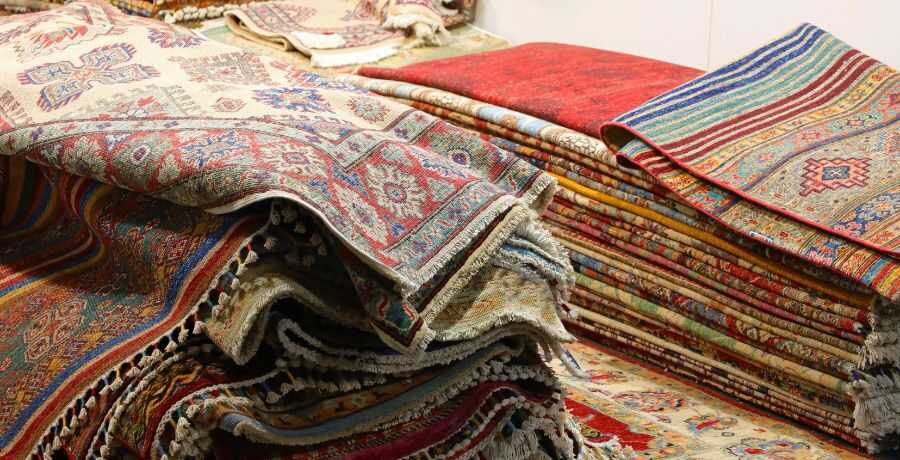
How long do Persian rugs last?
The short answer is: a high-quality Persian rug can last for decades, and many can last for generations when they are chosen well and cared for properly.
But the lifespan of a Persian rug is not determined solely by age. It depends on the craftsmanship, material, knotting, foot traffic, sunlight, cleaning, maintenance, and where the rug is placed in the home.
So, how long does a Persian rug last in an Australian home? It can be 50 to 100 years or more, but the real answer depends on how the rug is used day to day.
This guide is for homeowners, renters, collectors, and anyone wondering whether Persian rugs are truly worth the investment. We will look at how durable Persian rugs are, what factors affect their lifespan, and how simple care can help protect them for years.
Explore our broader rug collections if you are comparing styles, sizes, and long-term options for your home.
Persian Rugs Can Last 50 to 100+ Years
How long do Persian rugs last?
The truth is, a true, hand-knotted Persian rug can be expected to last for 50 to 100 years. There are even some pieces that can last longer, particularly if they are crafted from robust wool, natural fibres, tight knotting, and conventional weaving techniques.
Persian rugs are well-reputed for a reason. Traditional Persian carpets utilise structured knotting techniques, in which knots are tied around the rug’s foundation, a key factor in their durability.
There is also a large collection of historic Persian and Oriental rugs in major museums, including pieces from the fifteenth to the nineteenth centuries, indicating the good preservation of fine handmade carpets when properly preserved.
A good rug can withstand everyday use, including furniture, family living, walking, and frequent use.
There’s the key element: not all rugs labelled “Persian rug style” will last the same length of time.
A machine-made rug will not last as long as an authentic Persian carpet; at best, it will be beautiful at first. The materials used, the weaving technique, the basis on which the weaving is done, and the finishing are all factors.
The average lifespan of Persian rugs depends heavily on care. Textiles are vulnerable to damage from poor handling, moisture, light, dust and pests over time, making good maintenance important.
Why Persian Rugs Are Known for Their Longevity
Look at how they are made before looking at the age on paper.
An authentic Persian rug is not printed, glued, or hastily stitched together. It is constructed, knot by knot, row by row, over a solid base.
One of the important methods for the making of traditional Persian rugs is wrapping knots around the warps and cutting them so that the ends lie on the surface of the pile.
It Starts With the Foundation
The foundation is what gives the rug strength.
A well-made Persian rug usually has:
- A strong warp and weft structure
- Closely tied knots
- A dense pile
- Quality wool or natural fibres
- Secure edges and finishing
This is why Persian rugs can last for many years. The rug is designed to support weight, movement, furniture, and everyday living.
These Rugs Are Made to Be Lived With
Persian rugs may look refined, but they are not fragile display pieces when made properly.
I can see them used in living rooms, dining rooms, bedrooms and hallways in many Australian homes. A well-made rug should stand the test of time and withstand daily traffic.
Design Can Affect Durability, Too
Persian rugs come in various styles and types, each with different functionality and feel. Depending on the rug’s origin, some village/tribal rugs are known for thicker wool and sturdier texture, while fine city rugs might be more intricate in design and weave.
But then there are the true masterpieces where the artistry, materials, and craftsmanship coalesce.
Material Matters: Wool, Silk, Dyes and Everyday Wear
A Persian rug is as strong as the fibres, dyes and weaving that went into its creation. That’s why two rugs may appear alike on the surface but have entirely different Persian rug lives.
Wool Is Usually the Everyday Hero
For most Australian homes, wool is the most practical choice.
Wool Persian rugs are frequently recommended for areas where people walk, sit, gather, and live, such as living rooms, bedrooms, or family rooms.
Good wool will be naturally resilient, meaning it can withstand considerable foot traffic and bounce back nicely if well cared for.
Silk Is Beautiful, but More Delicate
Silk has a different personality.
It adds a more shimmery, brighter look to any Persian rug, but is typically reserved for formal rooms, bedrooms, wall displays, or less trafficked areas.
According to the Canadian Conservation Institute (CCI), both wool and silk can be damaged by sunlight, especially silk by ultraviolet light.
That is why I would not place fine silk rugs in the home’s busiest walkway.
Beautiful? Absolutely.
Hardwearing for rough daily use? Not always.
Dyes and Colour Also Affect Ageing
The dyes matter too.
Traditional vegetable dye rugs can age in a very beautiful way. Their tones soften with the years, giving the rug a warm, lived-in character people love.
My simple tips: rotate the rug, use curtains or blinds if the sun is at its peak, consider rug colour if the room is exposed to intense direct light.
Where You Place the Rug Can Change Its Lifespan
If asked, How long do Persian rugs last, I always reply, “The rug is only half the story.”
The other half is where you place it.
I’ve witnessed magnificent handmade rugs gracefully age for decades just by being put in the proper areas of the house. I’ve also noticed that even strong rugs have worn out more quickly when placed in the busiest part of the house.
High-Traffic Areas Need More Care
A Persian rug can be used for a much longer period in a formal sitting room than in a hallway, dining room, or main living area.
However, it doesn’t mean Persian rugs can’t be used in active areas. You absolutely can. However, with higher foot traffic, the rug requires more attention.
For instance, runner rugs in corridors are usually subjected to concentrated wear because everyone walks the same narrow path. If so, I’ll suggest:
- Rotating the runner more often
- Vacuuming gently and regularly
- Watching the edges and fringe
- Using a proper rug underlay
The Canadian Conservation Institute has suggested the following routine cleaning for carpets and rugs: use a standard vacuum attachment with low suction and no power head, particularly for handmade rugs and carpets.
eriodic professional cleaning may also be worthwhile as your rug ages, particularly for valuable handmade pieces. Before arranging the service, you can review the typical cost of professional rug cleaning and the factors that influence the final price.
Check out our Rug Cleaning and Washing Services
Size and Layout Make a Difference
Placement is key in the Australian home, particularly in open-plan homes with timber floors, where tiled areas and indoor/outdoor living come into play.
In fact, oversized rugs can age beautifully if used correctly under furniture. Furniture helps to define the space, and the rug is not constantly shifting or curling at the edges.
Balanced rooms, bedrooms, formal sitting rooms, or square furniture and traffic distribution can also work well with square rugs.
The simple rule: If it is in a quiet room, it will probably last many generations with minimal signs of wear. Even if it is located near the back door, kitchen, or a busy hallway, the Persian rug can have a very useful life, provided it is rotated, cleaned, and cared for.
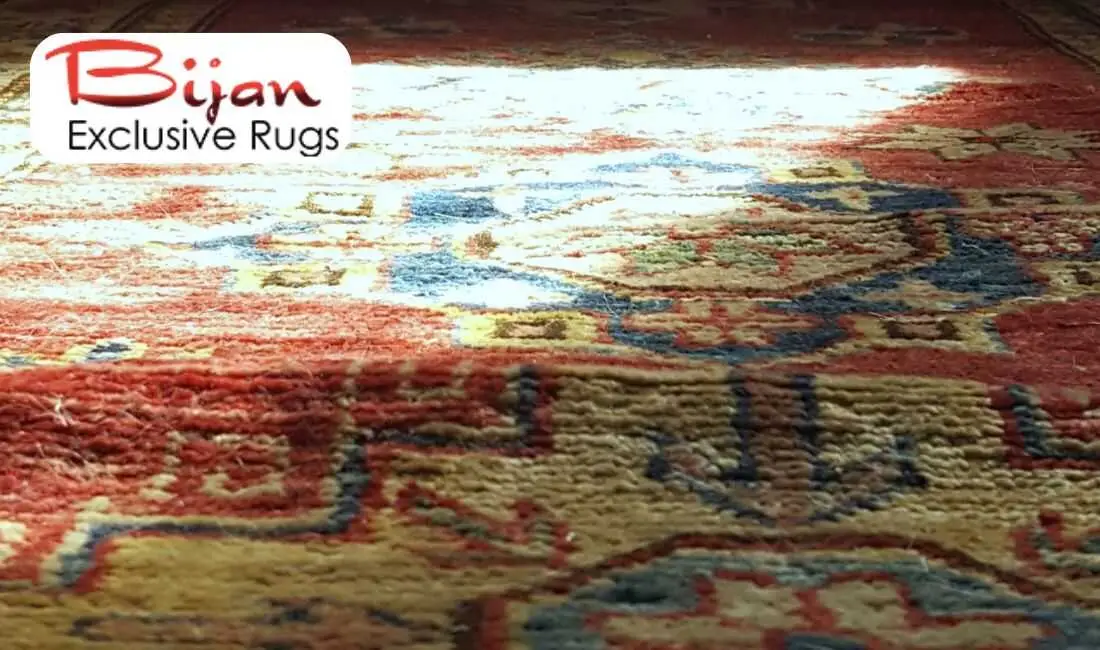
Australian Conditions That Can Affect Persian Rug Lifespan
Australian houses have their own conditions. The Persian rug lifespan can be affected by bright sunlight, coastal breezes, sandy shoes, pets, children, open doors for people to come in from outside entertaining spaces, air conditioning, and so on.
That does not mean Persian rugs are impractical here. Not at all.
With a quality handmade rug, an Australian home can look superb. All it requires is careful positioning and minimal maintenance.
Sunlight Is the Big One
Australia’s UV levels are high, and bright rooms with large windows require additional care.
However, with rugs, the problem isn’t only heat. Textiles can lose colour with exposure to light, and light damage to textiles is cumulative and irreversible.
My advice is simple:
- Use curtains, blinds, or UV-filtering window film.
- Rotate the rug every few months.
- Avoid placing your best rug in harsh direct sunlight all day.
This is one of the easiest ways to protect the lifespan of a Persian rug.
Moisture, Sand and Daily Living Matter Too
Humidity may also be an issue on the coast, particularly in houses close to the sea. High and long-term humidity can lead to condensation, which, in turn, can lead to damp, mould and rot inside a building.
I would steer clear of damp rooms, wet shoes, and places where the garden is walked through, which could leave sand or rain on a Persian rug.
A few habits help:
- Remove shoes where possible.
- Use a quality rug underlay.
- Keep rugs away from damp floors.
- Vacuum gently and regularly.
- Clean spills quickly instead of rubbing them.
Using an underlay can absorb shock and help to flatten and even the carpet, thus minimising unnecessary wear.
How to Tell If a Persian Rug Is Ageing Well or Wearing Out
Age is not the problem. The condition is.
I have seen Persian rugs that are older and would last for many more years. I have also encountered newer rugs that are degraded due to poor quality, improper installation, or inadequate maintenance.
Beautiful Ageing Has Character
A Persian rug that is ageing well usually has a softer, warmer appearance.
That’s what makes many people enjoy antique rugs and vintage rugs. They do not look brand new – that’s part of their charm. The rug is historical, has movement, and has a personality.
Damage Is Different From Natural Ageing
This is where I always ask people to look more closely.
Warning signs include:
- Fraying edges
- Damaged or disappearing fringe
- Exposed foundation threads
- Holes or thinning patches
- Moth damage
- Brittle fibres
- Severe fading
- Rippling or buckling
- Uneven wear through the pile
Rugs as coverings for the floor naturally wear with time, particularly the edges and fringes of the rug. Wool carpets can also be attacked by moths or carpet beetles, particularly in dusty or concealed areas, and offers instructions for preventing this.
Insect warning signs such as holes, missing pile, larvae, webbing, casings, eggs, and frass—all of which indicate that the rug requires attention and treatment soon.
If the rug is firm, flat, and the base remains, it is possible to use it for many years to come.
However, a Persian rug’s lifespan may depend on repairs, and proper care can be affected if it is brittle, splitting, extremely faded, or wearing down to the foundation.
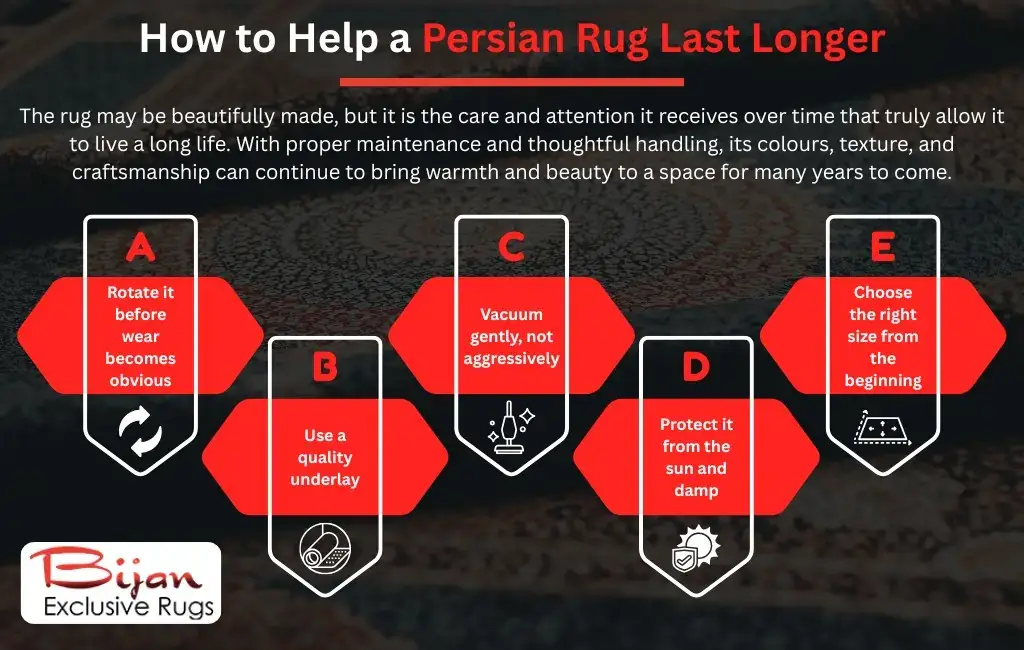
How to Help a Persian Rug Last Longer
The rug may be beautifully made, but it is care that helps it live a long life.
- Rotate it before wear becomes obvious: You can do one of the simplest tasks, that is, change the rotation of the rug every 6-12 months. This will help ensure the rug wears evenly, particularly in Australian homes where one side of the rug might receive more sunlight, foot traffic, or furniture pressure than the other.
- Use a quality underlay: One of the best-kept secrets to extending the lifespan of a Persian rug is a good underlay. It can help spread the rug out, minimise movement, and help alleviate walking pressure. This is particularly beneficial when working on timber floors, tiles and polished concrete.
- Vacuum gently, not aggressively: Persian rugs do not need rough treatment. The Canadian Conservation Institute suggests that the most effective method of vacuuming is with a standard vacuum head at low suction, using a power head, and moving in the direction of the pile.
- Protect it from the sun and damp: The sun can be really strong in Australia. Cancer Council Australia reports that Australia’s sun intensity is among the highest in the world. Additionally, textiles can be damaged by light over time; improper humidity levels, mould, insects, and air pollution are also problems; and poor handling practices can be disastrous as well, according to the Canadian Conservation Institute.
- Choose the right size from the beginning: Many people don’t choose the proper Persian rug size. If the rug is too small, it can shift, curl, bunch or wear out more towards the edges. A well-proportioned rug will sit nicely and move around well over the carpet. This is where a rug visualiser can come in handy when making a purchase. It allows you to visualise what the rug will look like in the space, helping you avoid incorrect placement and premature wear.
Are Persian Rugs Longer Lasting Than Other Rugs?
Persian rugs are known for their incredible durability, but that’s not the only handmade rug that will last.
With proper care, a well-crafted Persian rug can last 50 to 100+ years. However, other handmade rugs can be impressive as well. Here’s how Persian rugs differ from other oriental rugs in terms of lasting longer.
It Depends on the Rug, Not Just the Name
I wouldn’t claim that all Persian rugs last longer than other rugs. That would not be honest.
The real question is:
- Is it handmade?
- Is the wool good quality?
- Is the foundation strong?
- Is the rug suited to the room?
- Has it been cared for properly?
How Other Handmade Rugs Compare
From my experience at Bijan Exclusive Rugs, Afghan rugs can be very durable, particularly those with robust wool and assertive tribal motifs.
Turkish rugs also have a long tradition of being handmade. When hand-knotted and crafted from high-quality materials, Indian rugs and Pakistani rugs can also last a long time.
What About Modern Rugs?
Some modern rugs are beautiful and functional, while others offer a standard life expectancy, depending on the skill with which they are made, the type of fibres they contain, and their durability.
Conclusion: A Persian Rug Can Be a Lifetime Piece
So, how long do Persian rugs last? From my experience, a well-made Persian rug can last for decades, and often generations, when it is chosen carefully and maintained properly.
In Australian homes, the lifespan of a Persian rug depends on simple yet important factors such as sunlight, foot traffic, cleaning, placement, and regular care. When these are managed well, the lifespan of a Persian rug can be truly impressive.
At Bijan Exclusive Rugs, we have rugs for every kind of home, from everyday living spaces to statement rooms and long-term collector pieces.
Explore our collection today and find a Persian rug that can become part of your home’s story.